Eczema: Managing Atopic Dermatitis Long Term
Most people think eczema is just dry skin that needs better moisturizer. Here’s what’s actually true: atopic dermatitis is an immune dysfunction where your skin barrier has structural defects in its lipid layer, causing your immune system to attack it like an invader. Sarah, a 34-year-old marketing director, discovered this the hard way when she spent two years using expensive creams while her hands wept and cracked during winter. Her dermatologist finally explained that no amount of moisturizer could fix what was fundamentally a broken communication system between her skin cells and immune response. That distinction—understanding eczema as an immune-driven barrier disorder, not just a hydration problem—changed everything about how she managed it.
Key Facts About Eczema
- Atopic dermatitis affects 10.1% of American adults, according to CDC data, with prevalence increasing in recent decades
- The condition involves mutations in the filaggrin gene (FLG), which occurs in approximately 30% of people with moderate-to-severe eczema
- Patients with eczema spend an average of 23.2 hours per month on eczema management activities, per a JAMA Dermatology study
- Early-onset atopic dermatitis (before age 5) affects roughly 15-20% of children but resolves by age 10 in approximately 60% of cases
- The condition costs the U.S. healthcare system $5.3 billion annually in direct medical expenses and lost productivity
Understanding the Mechanism: What’s Really Happening
Think of your skin barrier like a brick wall. In healthy skin, the bricks are your skin cells (corneocytes), and the mortar holding them together is made of lipids—ceramides, cholesterol, and fatty acids. With atopic dermatitis, you have three simultaneous problems: defective bricks that don’t fit together properly, insufficient mortar to hold what bricks you have, and a hypervigilant border patrol (your immune system) that mistakes your own skin for a threat.
This creates a vicious cycle. Water escapes through the broken barrier, making skin progressively drier. Your immune system responds by releasing inflammatory cytokines like IL-4 and IL-13, which trigger itching. You scratch. Scratching damages the barrier further. More water loss. More inflammation. The cycle deepens.
What most articles skip: the itch-scratch cycle isn’t just psychological. It’s neurobiological. Nerve endings in eczema-prone skin release neuropeptides that directly activate immune cells. Your nervous system and immune system are literally talking to each other in a conversation that amplifies the problem. This is why antihistamines alone rarely work—you’re not fighting histamine; you’re fighting a broken electrical circuit.
Causes and Risk Factors
Genetic predisposition matters most. If one parent has atopic dermatitis, your risk increases roughly 50%. If both parents have it, your risk jumps to 80%. That FLG gene mutation I mentioned earlier doesn’t cause eczema by itself, but it stacks the deck heavily.
Environmental triggers vary wildly between individuals, but common culprits include low humidity (especially winter heating), irritants like sodium lauryl sulfate in detergents, fragrances, dust mites, and temperature swings. Stress is a legitimate trigger—not because you’re “anxious about your skin,” but because stress hormones like cortisol suppress immune tolerance and increase skin permeability.
Here’s the factor most websites miss: early-life antibiotic use appears to increase eczema risk. A study in Nature Medicine showed that broad-spectrum antibiotics in infancy alter the microbiome composition in ways that prevent proper immune system maturation. Your skin’s surface hosts its own microbial community, and when that community is disrupted, your immune system loses a training ground for distinguishing friends from foes.
Timing matters too. Eczema that starts early (infancy to age 5) often reflects stronger genetic influence. Adult-onset eczema frequently has occupational or environmental triggers—hairdressers develop hand eczema from chemical exposure; surgeons develop it from frequent hand-washing.
Recognizing Early Signs and Daily Symptoms
Most people don’t recognize eczema until it’s visible and itchy. But early warning signs are subtle. Patches of skin that feel rough before they look red. Increased sensitivity to products that never bothered you before. Your skin feels tight after showering even though you used lotion. These micro-changes often precede visible inflammation by weeks.
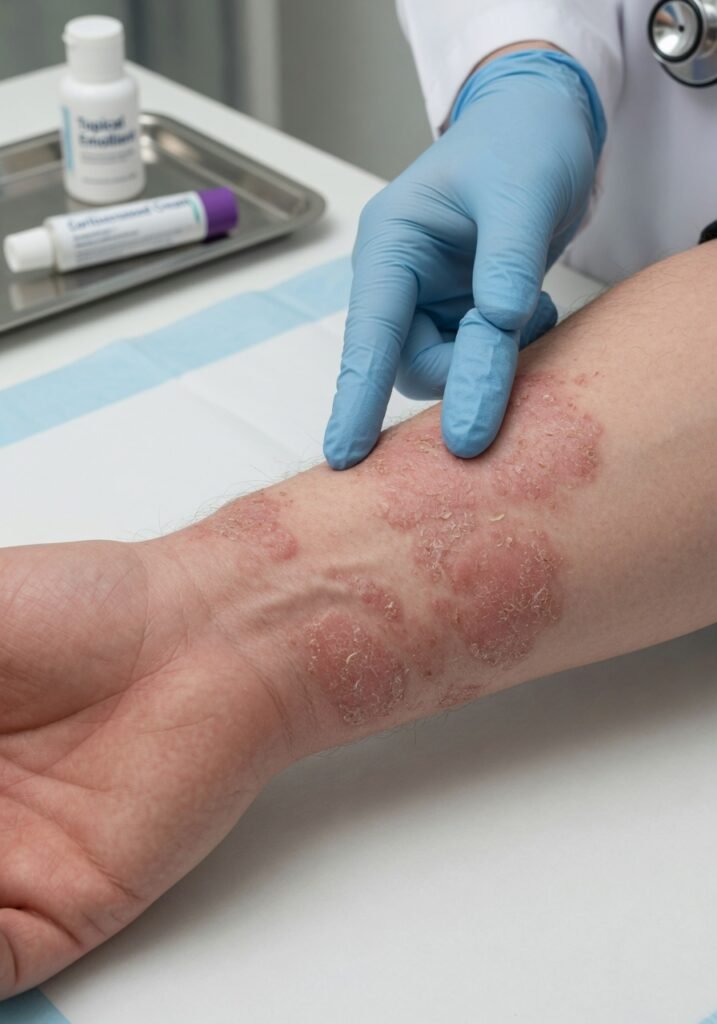
Once active, eczema creates specific daily realities. Intense itching that wakes you at 2 AM. Hands that crack and bleed around the knuckles, making typing painful. Weeping, honey-colored crusted areas (which indicate secondary bacterial infection—usually Staphylococcus aureus). Sleep disruption from itching, which itself worsens eczema by suppressing immune tolerance. Emotional toll from visible skin disease during important work presentations or social events.
Pay attention to your personal triggers by keeping a symptom diary. Note weather, products used, stress levels, foods eaten. Patterns emerge that are unique to your biology. What triggers your neighbor’s eczema might be neutral for you.
Getting Properly Diagnosed
There’s no blood test for atopic dermatitis. Dermatologists use clinical criteria—primarily the Hanifin and Rajka criteria or the UK Working Party criteria. A doctor is looking for: intense itching (required criterion), early age of onset, history of atopy (asthma, hay fever, or eczema in family), dry skin, visible inflammation, and characteristic location patterns (face and hands in adults; flexural surfaces in children).
Some dermatologists order specific IgE testing or patch testing if allergic contact dermatitis seems likely. A skin biopsy is rarely necessary unless the diagnosis is unclear or the disease pattern is atypical. The honest truth: diagnosis is clinical. Your dermatologist is reading your skin and your history, not running a definitive lab test.
Treatment Options: What Actually Works
Treatment depends on severity. Mild eczema (affecting less than 10% of body surface) typically responds to topical therapies. Moderate-to-severe eczema (10-50% of body surface or causing significant impairment) usually requires systemic therapy.
Topical steroids remain first-line for acute flares. Hydrocortisone 2.5% for the face, triamcinolone 0.1% for the body. They reduce inflammation rapidly but aren’t meant for indefinite use—prolonged application causes skin atrophy. Topical calcineurin inhibitors like tacrolimus and pimecrolimus work differently, suppressing T-cell activation without causing atrophy. They’re excellent for face and neck where steroid atrophy is concerning.
Phosphodiesterase-4 inhibitors represent newer topical therapy. Crisaborole (Eucrisa) is applied twice daily and shows efficacy comparable to mid-potency steroids without atrophy risk. Newer agents in this class are entering approval.
For moderate-to-severe disease, dupilumab (Dupixent) is genuinely transformative. It’s a monoclonal antibody targeting IL-4 receptor, blocking both IL-4 and IL-13 signaling—the primary inflammatory drivers in atopic dermatitis. Studies show 75% of patients achieve significant improvement within 16 weeks. It’s given as a subcutaneous injection every two weeks after a loading dose.
Baricitinib (Olumiant) is an oral JAK inhibitor approved for moderate-to-severe eczema. Taken once daily, it works by blocking intracellular signaling in immune cells. It works faster than dupilumab—some patients see improvement within days—but requires regular blood monitoring for liver function and cholesterol.
Cyclosporine is reserved for severe disease refractory to other treatments. It’s potent but requires close monitoring and has significant side effects with prolonged use.
Which works best? That depends on your disease pattern and values. Dupilumab excels in generalized eczema with significant itch. Baricitinib works faster and orally but requires monitoring. Topical therapies suffice for many if used correctly with proper maintenance.
Daily Management Strategies That Actually Work
Bathing technique matters more than product choice. Take lukewarm (not hot) baths or showers lasting 5-10 minutes, not 30 minutes. Hot water strips lipids from your barrier faster. Use non-soap cleansers—Cetaphil, CeraVe Hydrating Cleanser, or plain mineral oil work better than traditional soaps. Pat skin nearly dry (leaving it slightly damp), then immediately apply moisturizer within three minutes.
Moisturizer selection is personal but follows principles. Creams and ointments work better than lotions (they contain more occlusive ingredients). Ceramides, glycerin, and hyaluronic acid are evidence-backed. Apply to damp skin for better absorption. Many people with eczema need to moisturize twice daily, sometimes more during winter.
Identify and eliminate irritants. Sodium lauryl sulfate, fragrances, and dyes in detergents and personal care products trigger flares in many patients. Switch to free-and-clear detergents. Wear cotton clothing; avoid wool directly against skin. Keep nails short to reduce damage from scratching.
Control humidity. Use a humidifier in winter when heating dries indoor air. Aim for 40-60% relative humidity. This single change prevents countless winter flares.
Address sleep disruption actively. Poor sleep worsens eczema. Consider antihistamines like cetirizine at night if itch prevents sleep, or melatonin if anxiety about scratching disrupts sleep.
Prevention: What Evidence Actually Shows
True prevention in people with genetic predisposition is limited. You can’t unmutate the FLG gene. But you can prevent flares and reduce severity.
Early skin barrier care in infancy appears protective. Studies show that emollient therapy starting in the first weeks of life reduces eczema development in high-risk infants by roughly 30%—not perfect, but meaningful.
Allergen avoidance helps but is context-dependent. If you have documented dust mite allergy (via testing), using allergen-proof bedding covers helps. If you have no documented allergies, obsessive avoidance is exhausting and unproven.
Probiotics? The evidence is weak. A few studies suggest specific strains might help, but effects are modest and don’t compare to proper barrier care or immunosuppressive therapy.
Food elimination rarely helps unless you have documented IgE-mediated food allergy. Most patients improve more from skin barrier repair than from eliminating common trigger foods.
Frequently Asked Questions
Sources & Medical References
HealthTopics.com articles are based on peer-reviewed medical research and guidance from the NIH, CDC, and WHO. See our editorial policy for full sourcing standards.