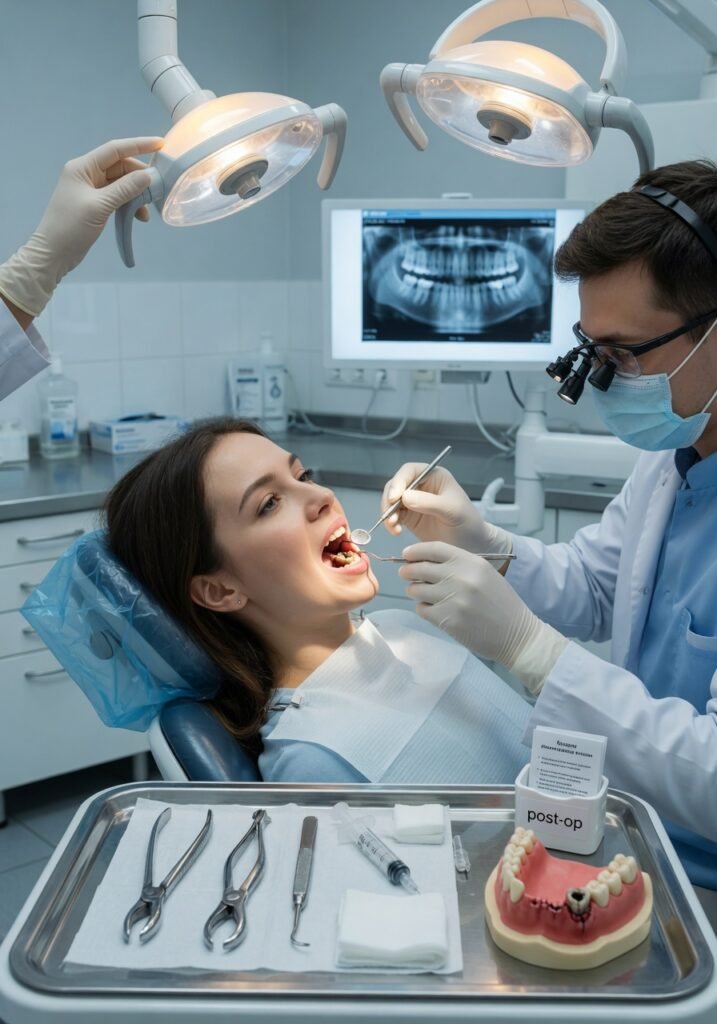
Tooth Extraction: When It’s Actually Necessary and How to Recover Properly
Sarah, a 42-year-old accountant, had been telling herself for three years that her lower molar was “fine enough.” It ached occasionally, sure, but wasn’t a problem that needed solving—or so she thought. Then the abscess came. Within 48 hours, she couldn’t chew on that side, her face was swollen, and her dentist delivered the news: the tooth needed to come out. Here’s what most patients get wrong: tooth extraction isn’t failure. It’s not what happens when you’ve neglected your teeth beyond redemption. It’s a legitimate treatment decision made for specific, valid reasons. In fact, according to the CDC, approximately 108 million Americans are missing at least one permanent tooth, and about 35 million are missing all their teeth. That’s not because everyone was negligent—it’s because sometimes, removing a tooth is the smartest choice.
Key Facts About Tooth Extraction
- The CDC reports that tooth loss affects roughly 1 in 4 adults over age 65, but extraction is performed across all age groups for multiple valid reasons.
- Approximately 20 million tooth extractions happen annually in the United States, with about 90% being preventable through earlier intervention.
- Wisdom teeth (third molars) account for roughly 35% of all extractions, typically between ages 16-25.
- The human mouth contains 32 permanent teeth, but we can function adequately with as few as 20 natural teeth, though bone loss accelerates after extraction.
- Post-extraction healing takes approximately 7-10 days for soft tissue closure, but complete bone remodeling continues for 3-6 months.
Understanding What Actually Happens When a Tooth Must Be Removed
Think of your tooth like a building with deep roots. When that building becomes structurally unsound—whether from damage, decay, or infection—removing it safely is more important than trying to shore it up indefinitely. The extraction itself isn’t just pulling; it’s a carefully orchestrated process where the dentist or oral surgeon widens the space around the tooth (called the periodontal ligament) that anchors it to bone, then removes it with minimal trauma to surrounding structures.
What happens afterward matters more than most patients realize. Once that tooth is gone, your body initiates a healing cascade. Blood fills the socket, forms a clot (which you absolutely should not disturb), and over the next two weeks, bone cells begin migrating inward to fill the void. This is why the socket can’t just stay empty—your jawbone will gradually resorb, meaning it shrinks and flattens. This happens whether you replace the tooth or not, but it happens faster without a tooth there applying pressure to the bone.
Causes and Risk Factors: Why Extraction Becomes Necessary
The most obvious reason is severe decay—when a cavity has eaten through the protective layers of your tooth down to the nerve, and the tooth can’t be saved with a root canal. But decay is only part of the story.
Periodontitis, or advanced gum disease, causes more tooth extractions than most people realize. When bacteria destroy the bone supporting your tooth, that tooth loses its anchor. It becomes mobile, sometimes painful, and eventually must be removed. Unlike decay, which you can see, bone loss happens silently. You might not notice until the damage is extensive.
Trauma accounts for another significant portion—a fall, car accident, or blow to the face can crack or shatter a tooth beyond repair. Orthodontic needs sometimes require extraction too; crowding so severe that teeth overlap may necessitate removing one or more teeth to align the rest properly.
Here’s what gets overlooked: medication-induced problems. Bisphosphonates, used for osteoporosis and some cancers, increase the risk of osteonecrosis of the jaw—a condition where bone tissue actually dies. If you’ve been on these medications and need an extraction, your dentist and physician must coordinate carefully. Similarly, immunosuppressed patients (those on corticosteroids, biologics, or recovering from cancer treatment) have delayed healing and higher infection risk after extraction.
Impacted wisdom teeth present a different scenario. These teeth never erupt, or erupt partially, creating pockets where bacteria thrive and infections recur. Removing them prevents ongoing problems.
Signs and Symptoms: What You’ll Actually Feel
Severe, localized throbbing pain is the most obvious signal. It’s often worse at night and doesn’t respond well to over-the-counter pain relievers. But pain isn’t always present—some patients experience just persistent sensitivity to temperature, especially cold water.
Swelling of the gum around one tooth, sometimes with a small pimple-like bump that weeps, indicates infection. This is your body’s attempt to drain pus from inside the tooth. The bump might come and go, which doesn’t mean the problem resolved—it means pressure built up and released.
Bad taste or odor from that specific area, even if your overall oral hygiene is good, suggests decay or infection deep in the tooth structure. Some patients notice their bite feels “off” around that tooth, or they can’t chew comfortably there anymore.
Early warning signs that slip past most patients: a tooth that’s slightly higher than adjacent teeth (might indicate bone loss underneath), or gradual loosening that increases over months. If your tooth feels slightly wiggly after years of stability, that’s bacterial destruction of supporting bone.
Diagnosis: How Your Dentist Determines Extraction Is Necessary
Your dentist starts with what they observe. They’ll check for mobility using gentle pressure from two instruments. If the tooth moves, they’re assessing the extent of support remaining. They’ll tap on the tooth with a small mirror handle—a sharp pain indicates likely nerve involvement, while a dull ache might suggest bone loss.
Radiographs (X-rays) show what’s invisible. They reveal bone loss around tooth roots, infections at the tip of the root appearing as dark areas, or decay patterns that extend beneath old fillings. Cone beam computed tomography (CBCT) might be ordered if extraction seems complex, showing three-dimensional bone structure and proximity to nerve canals.
Periodontal probing measures how deep the space is between your gum and tooth. Depths beyond 7-8 millimeters in multiple areas, combined with bleeding, indicate advanced bone loss. The dentist considers the tooth’s strategic importance too—a front tooth has cosmetic consequences, while a molar toward the back is often easier to replace.
Sometimes they’ll try to save the tooth first. A root canal eliminates infection from inside. If that fails or the tooth cracks afterward, extraction becomes the next step.
Treatment Options: When Extraction Is the Right Choice
Simple extractions work for teeth with visible crowns and single roots. Your dentist numbs the area with lidocaine (the standard local anesthetic), then uses an elevator to loosen the tooth and forceps to remove it. You feel pressure and hear cracking sounds, but shouldn’t feel pain. The whole process takes 5-15 minutes.
Surgical extractions apply to impacted wisdom teeth, teeth with curved roots that won’t come out straight, or teeth with significant bone coverage. An oral surgeon makes an incision in the gum, might remove small amounts of bone, and sometimes sections the tooth into pieces for easier removal. Local anesthesia plus nitrous oxide (laughing gas) handles minor cases; general anesthesia or IV sedation applies for more complex situations.
Before extraction, your dentist considers your overall health. Uncontrolled diabetes slows healing. Blood thinners like warfarin (Coumadin) or apixaban (Eliquat) increase bleeding risk—you won’t stop taking these, but your dentist coordinates with your physician about timing. Bisphosphonate users need special protocol to reduce osteonecrosis risk.
Pain control afterward typically involves ibuprofen 600 milligrams every 6 hours for the first 48 hours—better than acetaminophen alone because NSAIDs reduce inflammation alongside pain. Many surgeons prescribe amoxicillin or clindamycin if infection is present, though prophylactic antibiotics for simple extractions in healthy patients actually don’t improve outcomes and contribute to resistance.
Practical Daily Management During Recovery
The first 24 hours, that blood clot in the socket is everything. Don’t rinse, spit forcefully, or use straws—any of these can dislodge it and cause dry socket (alveolar osteitis), which is painful and delays healing. Just let saliva drool into a tissue if needed.
Ice packs for the first 48 hours reduce swelling dramatically. Apply 20 minutes on, 20 minutes off. After 48 hours, switch to warm compresses to promote circulation. Your face will swell maximally around day 3, then gradually improve.
Sleep with your head elevated above your heart those first few nights—this means using two pillows. Gravity working against swelling helps.
Starting day 2, do gentle warm salt water rinses (1/2 teaspoon salt in 8 ounces water) after meals and before bed. This keeps the area clean without disturbing the clot. Soft foods for the first week: yogurt, soup, mashed potatoes, scrambled eggs. Nothing hard, sticky, or hot.
Avoid smoking and alcohol for at least a week. Smoking constricts blood vessels and delays healing. Alcohol thins blood and increases bleeding risk.
Prevention: Keeping Extraction Off Your Horizon
Floss daily. This is where prevention actually matters most, and it’s the habit least consistently maintained. Floss reaches bacteria in spaces toothbrush bristles cannot, preventing the early-stage gum disease that eventually leads to bone loss and extraction. Studies show only about 30% of Americans floss daily, yet it’s the single strongest predictor of tooth retention long-term.
Get professional cleanings twice yearly. These remove tartar (hardened plaque) that you cannot remove at home. If you have any gum disease history, go every 3-4 months instead.
Address decay early. A filling catches problems before they require root canals or extraction. Once decay reaches the nerve, your options shrink.
If you grind your teeth, wear a night guard. Grinding creates stress points that crack teeth and accelerate bone loss around tooth roots. Your dentist can fit you with a custom guard.
Manage systemic conditions. Diabetes dramatically accelerates bone loss and infection risk. Tight blood sugar control reduces extraction rates. Similarly, treat sleep apnea if you have it—it increases inflammation throughout your mouth.
Frequently Asked Questions
Sources & Medical References
HealthTopics.com articles are based on peer-reviewed medical research and guidance from the NIH, CDC, and WHO. See our editorial policy for full sourcing standards.