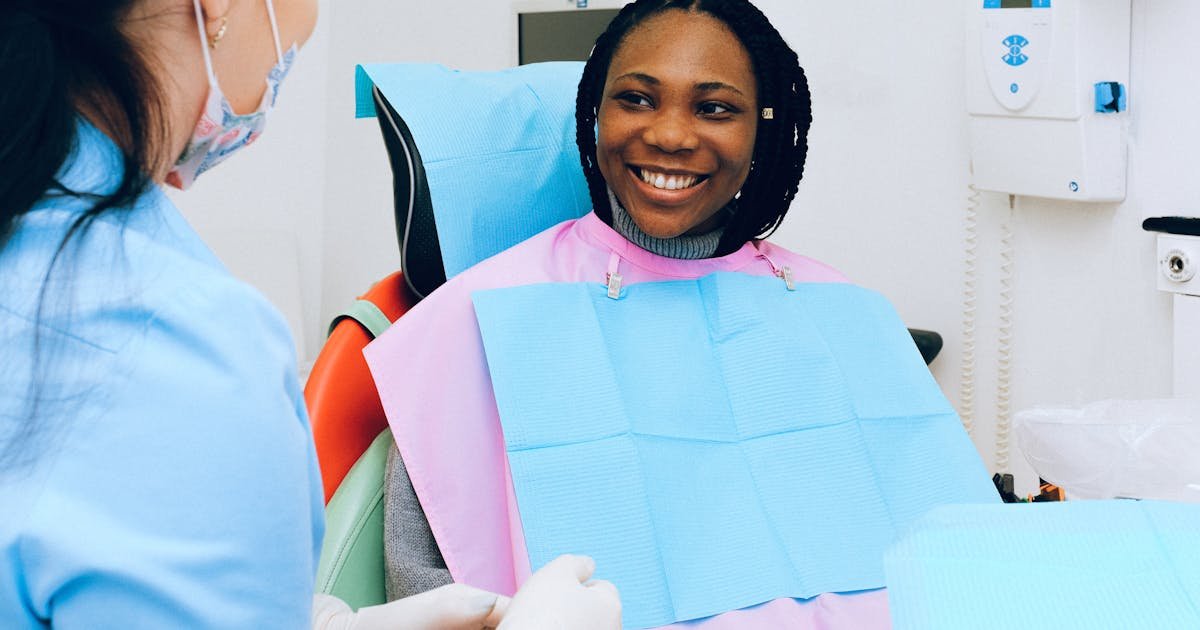
Sarah sat in my dental chair convinced that root canal therapy would be the most painful experience of her life. She’d heard horror stories from coworkers, seen memes about it, and basically assumed she’d be signing up for dental torture. When I told her the truth—that the infection in her tooth was causing more pain than the actual procedure would—she looked at me like I’d just performed magic. Here’s what most people get wrong: a root canal doesn’t cause pain. It relieves it. The tooth in question is already inflamed and infected. We’re removing that infected tissue. The procedure itself uses anesthesia, modern instruments, and techniques refined over decades. The misconception persists because people conflate the pre-treatment pain (which is real and miserable) with the procedure itself (which most patients describe as no worse than a filling).
Key Facts About Root Canal Treatment
- According to the American Association of Endodontists, approximately 25.5 million root canal treatments are performed annually in the United States, with a success rate of 86-98% depending on tooth type and complexity.
- The CDC reports that untreated dental infections can spread to the brain or heart, making timely endodontic treatment potentially life-saving in severe cases.
- Most root canals require 30-60 minutes for anterior teeth and 60-90 minutes for posterior teeth with multiple roots; contrary to popular belief, this is typically faster than a crown preparation.
- Modern rotary nickel-titanium instruments reduce procedural time by approximately 40% compared to hand-filing techniques used 15 years ago.
- Approximately 9 in 10 teeth that receive root canal therapy survive for 10 or more years when properly restored with a crown or filling.
Understanding Root Canal: What’s Actually Happening Inside Your Tooth
Your tooth is basically a living organ. At the center is the pulp chamber—a space containing blood vessels, nerves, and connective tissue. Think of the pulp like the electrical wiring and plumbing of your tooth. When bacteria invade (usually through decay or trauma), the pulp becomes inflamed and infected. Your immune system fights back, but the sealed nature of a tooth means pus and inflammation have nowhere to go, building pressure and causing pain.
Here’s what most dental websites miss: the pain isn’t uniform. Some patients experience a sharp, localized ache. Others describe a deep, throbbing sensation that radiates to the jaw or temple. A few experience referred pain—discomfort that seems to come from an entirely different tooth. This variation happens because the trigeminal nerve, which supplies sensation to your face, branches extensively, and inflammation in one tooth can trigger pain signals along multiple pathways.
Root canal therapy removes that infected pulp tissue. We access the pulp chamber by making an opening in the crown of the tooth, locate the root canals (teeth can have 1-4 canals), and use progressively larger files to clean and shape them. The canals get sealed with gutta-percha, a rubber-like material, and cement. No nerve tissue remains afterward. The tooth is then typically restored with a filling or crown to prevent future infection and restore function.
Causes and Risk Factors: Why Your Tooth Got Here
Deep decay is the most common cause—when cavities go untreated long enough, bacteria reach the pulp. Trauma comes second: a blow to the tooth during sports, a car accident, or even biting down on something hard can crack the tooth and expose the pulp to infection. Repeated dental procedures on the same tooth, multiple fillings, or aggressive grinding can also irritate the pulp over time.
Here’s what dentists notice but rarely discuss with patients: cracked tooth syndrome. A microscopic or small visible crack in a tooth allows bacteria to seep down during temperature changes and chewing. The person might not even remember the initial injury. They just know that cold water causes pain, or that chewing feels strange. By the time they get imaging done, the pulp is already compromised. Cracks don’t heal themselves, and they progressively worsen with each bite.
Periodontal disease increases risk significantly. When gum infections reach the root tip (the apex of the root), bacteria can enter the pulp space from below rather than from above. People with untreated gum disease often think their aching teeth are simply sensitive when actually their periodontal pockets have created a bacterial highway straight to the pulp.
Age doesn’t predispose you to root canal treatment, but age does change the anatomy. As you get older, the pulp chamber shrinks naturally, and canals calcify. This makes treatment technically harder for the dentist but doesn’t increase the likelihood of infection.
Signs and Symptoms: What You’ll Actually Feel
Most people don’t wake up one morning with a tooth screaming in pain. It usually starts subtly. You notice that one tooth feels slightly different when you drink hot coffee. Not painful yet—just sensitive. Days or weeks pass. The sensitivity worsens and becomes more persistent. You might feel it only with pressure or cold, but the pattern is clear to you.
Then comes the deep ache. This is different from the sharp sensitivity of a cavity. It’s a low-grade throb that might wake you at night or make it hard to fall asleep. You find yourself favoring one side of your mouth when chewing. You take ibuprofen, and it helps temporarily, but the pain returns.
Some patients experience swelling—in the gum around the tooth, or in the face or jaw on that side. This is your body’s inflammatory response. Occasionally, a small pimple-like bump appears on the gum above the problematic tooth. That’s a fistula, essentially a drainage point for pus from the infection. Don’t squeeze it. Don’t drain it. That’s a sign you need professional treatment urgently.
Here’s an overlooked early warning sign: the tooth feeling slightly “high” in your bite. When a tooth’s pulp becomes inflamed, the tooth can erupt slightly because inflammation causes slight edema in the periodontal ligament. You’ll chew and feel that one tooth contacting before the others. This sensation often comes before significant pain develops.
Diagnosis: How We Confirm What’s Wrong
I start by listening to your story. When did the pain start? What triggers it—temperature, pressure, nothing in particular? How long do episodes last? Then comes the examination. I test the tooth with cold (we use ice-cold water or a stick of dry ice) to see if it’s hypersensitive. I tap on it to assess for percussion sensitivity, which suggests pulpal inflammation. I probe the margins of any existing filling to look for decay.
X-rays are essential but not always diagnostic. A periapical X-ray (a small image of just that tooth and surrounding bone) shows decay, existing fillings, and sometimes bone loss around the root tip. But early pulpal inflammation might not show any visible change on radiographs. Advanced imaging like cone-beam CT scans can reveal cracks or other anatomical issues regular X-rays miss, though we reserve this for complex cases.
Pulp vitality testing uses electric stimulation or cold responsiveness to determine whether the pulp tissue is alive. A tooth with dead pulp often responds poorly or not at all. Sometimes we use these tests to differentiate which tooth in a cluster is actually the problem—you’d be surprised how often the tooth that hurts isn’t the one causing trouble.
Treatment Options: What Modern Endodontics Can Do
Root canal therapy is the primary treatment for infected pulp. We administer local anesthesia (usually lidocaine with epinephrine) injected at the apex and around the tooth. Most people expect the injection to hurt most. Modern techniques—using thin needles, warming the anesthetic slightly, and injecting slowly—make this far less unpleasant than it was decades ago. You’ll feel pressure and a brief burning sensation, then numbness spreads within seconds.
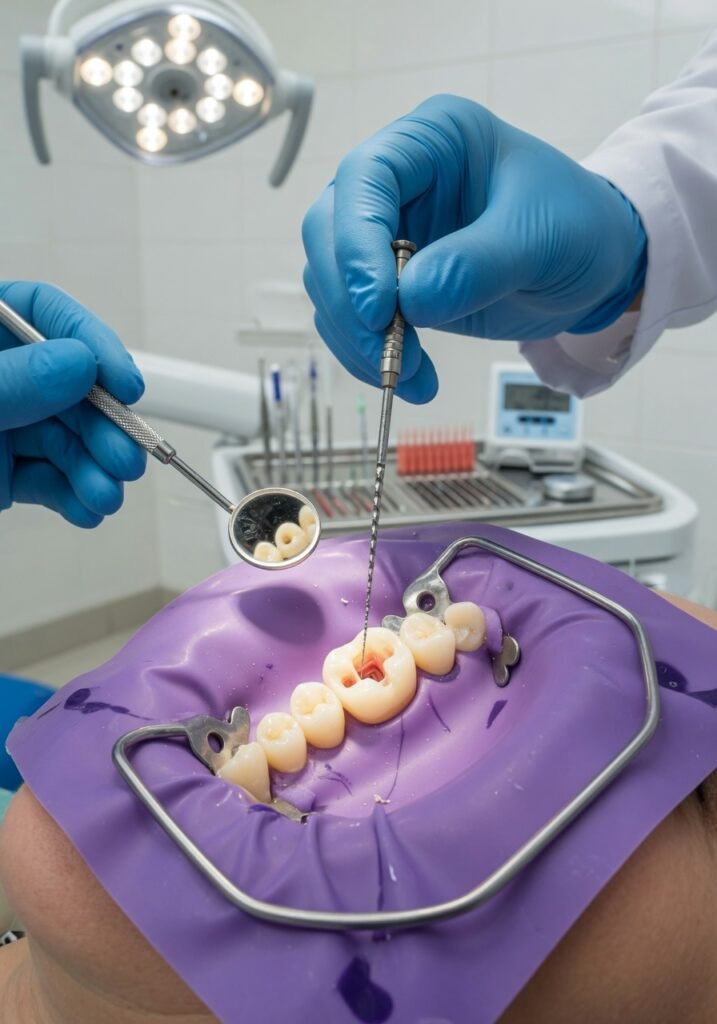
We place a rubber dam around the tooth—a sheet of latex or non-latex rubber held in place by a clamp that isolates the tooth and keeps your mouth dry. This is non-negotiable for successful treatment. Then we access the pulp chamber, remove the infected tissue, shape the canals with rotary instruments, and irrigate thoroughly with sodium hypochlorite (bleach solution diluted to safe concentrations) and EDTA to remove debris and dissolve the smear layer.
Once clean and shaped, we obturate the canals—fill them completely—with gutta-percha and an epoxy resin sealer. We use a warm vertical condensation technique for most posterior teeth, which creates a homogeneous fill and seals walls more effectively than older cold-packing methods. Your tooth gets a temporary or permanent restoration afterward.
Occasionally, if the tooth has retreatment already or unusual anatomy, we might recommend surgical endodontics—an apicoectomy where we access the root tip from the outside through the bone and gum, remove the problematic end, and seal it directly. This is less common but highly successful when indicated.
Practical Daily Management During and After Treatment
Before your appointment, take ibuprofen or naproxen 30-45 minutes beforehand. NSAIDs reduce inflammation, which sometimes makes anesthesia work more effectively. Eat a light meal beforehand—don’t arrive hungry or having skipped meals, as anxiety worsens pain perception.
After treatment, your tooth will feel tender for a few days. This is post-operative inflammation, not treatment failure. Take over-the-counter pain relievers: ibuprofen 400-600 mg every 4-6 hours or naproxen 220-440 mg twice daily for 3-5 days works well. Some offices prescribe stronger analgesics like tramadol or hydrocodone if needed, though most people don’t require them.
For the first week, avoid chewing on that side. Stick to soft foods. Avoid very hot foods and drinks—the tooth sensitivity might persist temporarily. Don’t press on the treated tooth with your tongue (harder than it sounds). Schedule your crown or final restoration promptly. A treated tooth without a crown is like a house without a roof—it’s only a matter of time before something gets inside.
Prevention: What Actually Works
The JAMA Dental Review reported that dental sealants reduce decay risk in grooved posterior teeth by 80%. If you have deep grooves in your molars, ask about them. Fluoride toothpaste (1450 ppm fluoride concentration or higher) reduces cavities. Water fluoridation—which the NIH confirms is safe and effective—cuts decay rates substantially.
Brush twice daily with a soft-bristled toothbrush, two minutes each time. Floss daily or use interdental brushes. Oral irrigators (water flossers) help but don’t replace mechanical flossing. See your dentist every six months for cleanings and examination. If you grind your teeth, wear a night guard—grinding creates the microcracks that lead to pulpal exposure.
Avoid chewing ice, hard candy, or opening packages with your teeth. Wear a mouthguard during contact sports. And here’s the counterintuitive point: don’t ignore early symptoms. That minor sensitivity? That slightly odd bite? Get it checked. Early intervention prevents progression to pulpal infection and makes treatment simpler.
Frequently Asked Questions
Does a root canal hurt more than a regular filling?
No. Both procedures use anesthesia so you shouldn’t feel pain during either one. A root canal takes longer (45-90 minutes versus 15-30 for a filling), so you might feel pressure or vibration, but not pain. The reason people associate root canal with severe pain is because they remember the tooth’s pain before treatment—which was real and intense—and conflate that with the procedure itself.
Can I get a root canal if I’m pregnant?
Yes, and sometimes you should. If you
Sources & Medical References
HealthTopics.com articles are based on peer-reviewed medical research and guidance from the NIH, CDC, and WHO. See our editorial policy for full sourcing standards.