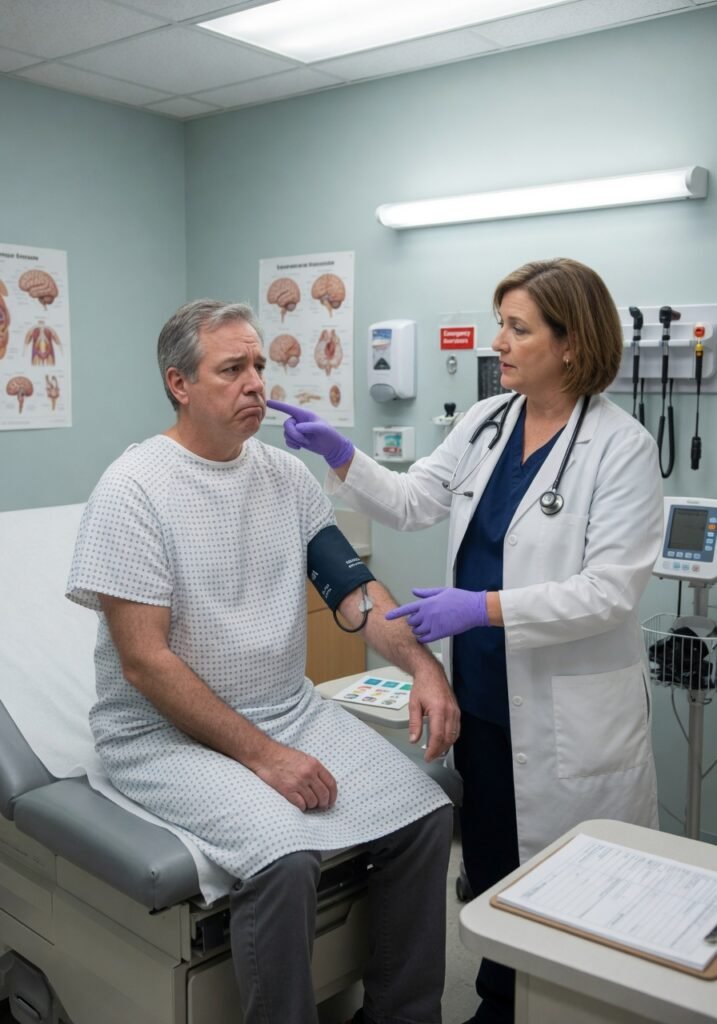
Sarah was making breakfast on a Tuesday morning when her husband noticed she couldn’t flip the pancake properly—her left arm just wouldn’t cooperate. He mentioned it casually, but she dismissed it as nothing, maybe she’d slept wrong. Twenty minutes later, she couldn’t find the word for “coffee,” and that’s when he knew something was genuinely wrong. He called 911 immediately. Later at the hospital, the neurologist told them that call likely saved her from permanent disability. What he’d recognized without even thinking about it was a stroke unfolding in real time.
Stroke kills one person in the United States every 3.5 minutes, and yet most people would fail a pop quiz on recognizing one. The difference between recognizing a stroke in the first minutes versus the first hours often determines whether someone walks out of the hospital or leaves in a wheelchair. This guide walks you through what’s actually happening in the brain during a stroke, how to spot it, and exactly what to do when you do.
Key Facts About Stroke
- Approximately 795,000 Americans experience a stroke annually, with about 610,000 being first or new strokes, according to the CDC
- Ischemic strokes account for 87% of all strokes; the remaining 13% are hemorrhagic strokes that involve bleeding in the brain
- The “golden window” for thrombolytic therapy (clot-busting medication) is 4.5 hours from symptom onset, though some patients benefit up to 24 hours with newer thrombectomy procedures
- Hypertension is present in 70% of stroke patients and remains the single strongest modifiable risk factor for both types of stroke
- Women have a higher lifetime risk of stroke than men, partly because they live longer and are more likely to experience stroke after age 75
Understanding What Actually Happens During a Stroke
Think of your brain’s blood vessels like roads delivering fuel and oxygen to neighborhoods. When a clot blocks one of these roads (ischemic stroke) or when a vessel ruptures and spills blood into the brain tissue itself (hemorrhagic stroke), the neighborhoods downstream of that problem run out of fuel within minutes. Brain cells are metabolically greedy—they’ll start dying if they don’t get oxygen within 4 to 6 minutes, though some can hang on for a few hours if blood flow is partially restored quickly enough.
The tricky part? The dying brain cells don’t announce themselves. You won’t feel pain in your brain. Instead, you’ll notice what those dead or dying cells controlled—your ability to move your arm, understand language, see clearly, or feel your face. The location of the blockage or bleed determines exactly what malfunctions you’ll experience. A clot in the left middle cerebral artery creates right-sided weakness and speech problems. A clot in the right posterior cerebral artery might cause left-sided vision loss. This is why neurologists can sometimes predict where the stroke is located just by asking you a few questions.
Risk Factors: Beyond the Obvious Ones
You’ve probably heard about high blood pressure, high cholesterol, and diabetes. Those matter enormously—and they’re worth controlling. But here’s what gets overlooked: nocturnal blood pressure dipping. Some people have a normal blood pressure during the day but inadequate dipping at night, when blood pressure naturally falls by 10 to 20%. This abnormal pattern significantly increases stroke risk independent of daytime blood pressure readings. Your cardiologist might catch this on a 24-hour ambulatory monitor, but many primary care doctors don’t check for it.
Other important factors include atrial fibrillation, which affects about 2.7 million Americans and increases stroke risk fivefold because the irregular heartbeat allows blood to pool and clot; migraines with aura, particularly in women who smoke; and sleep apnea, which disrupts oxygen delivery during sleep and makes the blood hypercoagulable. Recent infection—specifically respiratory infections—has been shown to increase stroke risk for up to 15 days afterward, likely through inflammatory mechanisms. Estrogen-containing birth control pills add a small additional risk, though the absolute number of strokes attributed to oral contraceptives is relatively small.
Recognition: The FAST Method and What It Actually Means
Face: Ask the person to smile. A true stroke often causes facial droop on one side because the affected brain hemisphere controls the opposite side of the body. The smile will look lopsided. This works because smiling involves bilateral facial muscles, and a unilateral stroke affecting facial nerves becomes obvious.
Arm: Ask them to hold both arms out in front with palms up for 10 seconds. A stroke-affected arm will drift downward or rotate inward. Even mild weakness becomes apparent with this test because gravity keeps pulling against their effort.
Speech: Ask them to repeat a simple phrase like “The quick brown fox jumps over the lazy dog.” Listen for slurred speech, word-finding difficulties, or odd grammatical errors. Stroke-related speech problems often include repetition of words without meaning, inability to name objects (anomia), or comprehension deficits where they don’t understand what you’re saying.
Time: Note the exact moment symptoms started. This timestamp determines which treatments are available. Call 911 immediately if any of these signs are present.
Here’s what most people don’t realize: TIA (transient ischemic attack) symptoms also meet FAST criteria, but they resolve within 24 hours—usually within minutes. Don’t wait to see if symptoms improve. Every TIA is a warning sign that a full stroke is likely coming. Treat it as a medical emergency regardless of recovery.
One more overlooked sign: sudden severe headache, especially if accompanied by neck stiffness, nausea, or loss of consciousness. This pattern suggests hemorrhagic stroke, which requires different emergency management than ischemic stroke.
The Diagnostic Process at the Hospital
When you arrive at an emergency department with suspected stroke, timing becomes everything. The first test is a non-contrast CT scan of the head, which takes about 5 minutes and determines whether bleeding is present. This distinction matters because the two stroke types get treated completely differently.
For ischemic stroke patients within the treatment window, an MRI with perfusion imaging shows which brain tissue is dead (infarct core) versus which tissue is struggling but salvageable (penumbra). This imaging helps guide decisions about thrombolytic drugs like alteplase (tPA) or thrombectomy, which physically removes the clot using an interventional catheter.
Blood work checks for things like elevated glucose (which worsens stroke outcomes), electrolyte imbalances, and coagulation status. An ECG screens for atrial fibrillation, which might have caused the stroke. The doctor performs a neurological exam using the NIH Stroke Scale, a 15-item assessment that gives a numerical severity score and helps predict outcomes.
Treatment: What Works and When
For ischemic strokes caught within 4.5 hours, intravenous alteplase (Activase) dissolves the clot. The medication carries a small risk of bleeding complications, but restoring blood flow within that window saves brain tissue significantly more often than harm occurs. Studies show approximately 30 to 40% of patients treated with thrombolytics within three hours achieve excellent recovery versus only 26% of untreated patients.
For larger clots or patients beyond the thrombolytic window, mechanical thrombectomy—where a neurointerventionalist threads a catheter up to the clot and retrieves it—works even up to 24 hours in carefully selected patients with imaging showing a large mismatch between the infarct core and penumbra. This procedure has essentially revolutionized stroke outcomes for large vessel occlusions.
Hemorrhagic stroke treatment focuses on stopping the bleeding and managing increased intracranial pressure. Blood pressure control becomes critical—too high and bleeding worsens, too low and the damaged brain tissue gets inadequate perfusion. Reversal agents for anticoagulants like warfarin (Coumadin) or dabigatran (Pradaxa) may be administered. Surgery occasionally becomes necessary to remove a hematoma if it’s pressing dangerously on brain tissue.
After the acute phase, rehabilitation through physical therapy, occupational therapy, and speech-language pathology begins. The brain has remarkable neuroplasticity, particularly in the first three months after stroke, and intensive therapy during this window produces better long-term outcomes than delayed rehabilitation.
Day-to-Day Management After Stroke
Once discharged, stroke survivors need a structured approach. Blood pressure management through medications like lisinopril or amlodipine becomes non-negotiable—target blood pressure is typically under 140/90 mmHg, or even lower depending on individual factors. Antiplatelet therapy with aspirin or clopidogrel (Plavix) prevents recurrent clots. If atrial fibrillation was identified, anticoagulation with warfarin or a direct oral anticoagulant like apixaban (Eliquat) or rivaroxaban (Xarelto) offers superior stroke prevention.
High-intensity statin therapy with atorvastatin 80 mg daily reduces recurrent stroke risk by about 20%. Realistic rehabilitation expectations matter—recovery plateaus around three to six months for most patients, though some improvements continue beyond that. Setting specific, measurable goals (“I want to walk to the mailbox without stopping” rather than “I want to get better”) creates motivation and trackable progress.
Prevention: What the Evidence Actually Shows
Blood pressure control prevents more strokes than any other single intervention. For every 10 mmHg reduction in systolic blood pressure, stroke risk drops roughly 19%. Physical activity of at least 150 minutes weekly at moderate intensity reduces stroke risk by approximately 25%. Mediterranean diet adherence shows consistent stroke reduction in randomized trials—emphasis on olive oil, vegetables, whole grains, legumes, and moderate fish intake.
Managing diabetes to a hemoglobin A1c below 7% helps, though tight control (A1c below 6.5%) doesn’t add additional benefit and increases hypoglycemia risk. Smoking cessation cuts stroke risk in half within one year compared to continued smoking. Limiting alcohol to one drink daily for women and two for men reduces stroke risk; heavier consumption increases it significantly.
What many prevention articles miss: sleep quality matters. Adults sleeping less than six hours nightly show increased stroke risk, as do those with untreated obstructive sleep apnea. A simple screening question during your annual physical—”Do you snore or wake gasping for air?”—might identify sleep apnea treatable with CPAP therapy, reducing cardiovascular events substantially.
Frequently Asked Questions
Yes. “Silent strokes” occur in 10 to 15% of people and are typically discovered incidentally on brain imaging done for other reasons. These small infarcts, usually in deep brain structures, don’t produce noticeable symptoms but do increase dementia risk. If you have multiple risk factors, discussing brain imaging screening with your doctor might be worthwhile.
Stroke symptoms develop suddenly, within seconds to minutes. This abruptness distinguishes stroke from other conditions like migraines (which build gradually) or Todd’s paralysis after seizures (which resolves within hours). Any sudden neurological change demands immediate emergency evaluation.
Not necessarily. While many strokes affecting major arteries cause one-sided symptoms, strokes in the brainstem or cerebellum can cause bilateral symptoms, balance problems without weakness, or vision loss. Don’t assume asymmetrical symptoms are
Sources & Medical References
HealthTopics.com articles are based on peer-reviewed medical research and guidance from the NIH, CDC, and WHO. See our editorial policy for full sourcing standards.