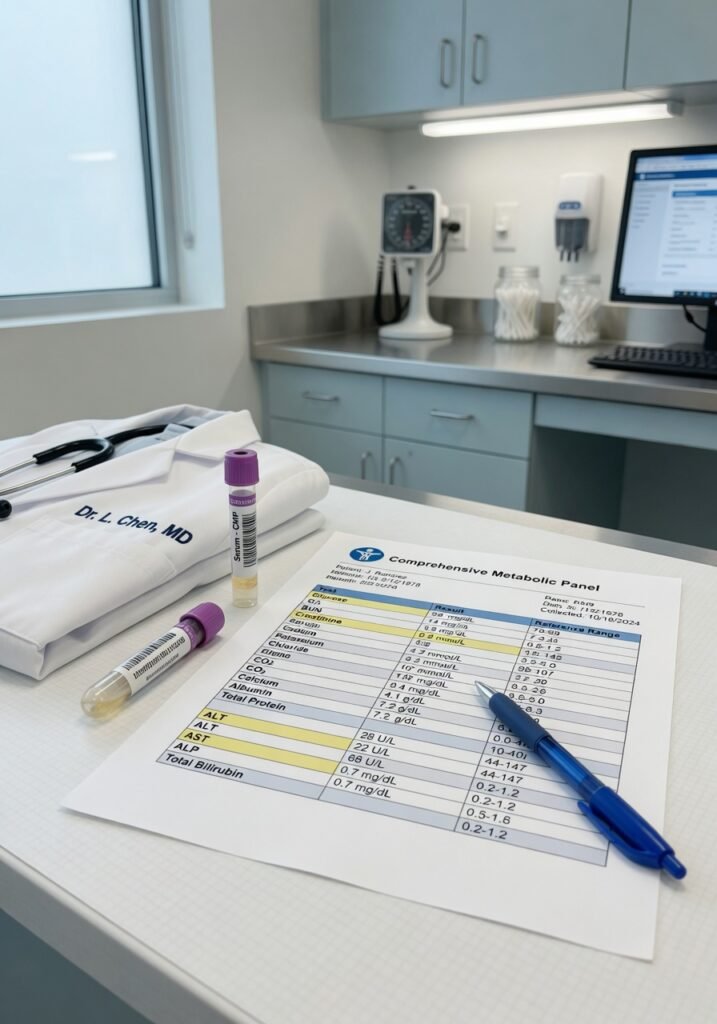
Most people think a Comprehensive Metabolic Panel (CMP) is just another standard blood test their doctor orders at annual checkups. But here’s what actually matters: your CMP is a functional snapshot of whether your kidneys can filter waste, whether your liver can process toxins, whether your electrolytes are balanced enough to keep your heart beating regularly, and whether your blood sugar and protein levels suggest deeper metabolic trouble. Unlike specialists who focus on one system, the CMP reveals how your whole body’s chemistry works together. When I review CMP results with patients, I’m looking for patterns that hint at disease years before symptoms appear—and that’s what separates early intervention from crisis management.
Key Facts About the Comprehensive Metabolic Panel
- The CMP measures 14 distinct values: sodium, potassium, chloride, CO2, BUN, creatinine, glucose, calcium, total protein, albumin, total bilirubin, alkaline phosphatase, AST, and ALT.
- According to the CDC, approximately 37 million Americans have chronic kidney disease, yet many discover it through abnormal creatinine and BUN on routine CMP screening.
- CMP results change based on hydration status, time of day, medications taken that morning, and even recent meals—factors most patients don’t realize affect their numbers.
- Potassium levels between 3.5-5.0 mEq/L are considered normal, but even slight elevations can trigger dangerous heart arrhythmias in susceptible patients.
- The albumin measurement on your CMP reflects your nutritional status and liver synthetic function over the past 20 days, making it one of the most clinically useful components.
Understanding the CMP: What’s Actually Happening
Think of your CMP like a dashboard warning system in your car. The engine (your metabolism) is running constantly, and different gauges monitor different systems. Your kidneys are the exhaust system—they filter nitrogen waste (BUN) and creatinine from your blood. Your liver is the oil system—it processes bilirubin from old red blood cells and manufactures albumin protein. Your pancreas is the fuel pump—it regulates glucose delivery. Electrolytes like sodium and potassium are the spark plugs—without proper levels, nothing fires correctly. When one gauge reads abnormal on your CMP, I’m not just looking at that single number in isolation. I’m asking: what else might be broken that would cause this reading?
The biology here is straightforward but easy to miss. Your glomeruli (tiny kidney filters) remove excess water, urea, and creatinine into urine. When creatinine creeps up from 0.9 to 1.5 mg/dL, it means those filters are working at maybe 50% capacity. Your liver processes ammonia into urea and conjugates bilirubin for excretion. When AST and ALT (liver enzymes) spike above 40 units/L, hepatocytes are literally breaking open and spilling their contents into your bloodstream. These aren’t abstract numbers—they’re physical changes you can’t feel yet, but they’re happening.
Causes and Risk Factors for Abnormal Results
The obvious culprits everyone knows about: diabetes causes elevated glucose, hypertension stresses the kidneys causing creatinine rise, and cirrhosis damages the liver affecting bilirubin. But what gets missed? Medication interactions. NSAIDs like ibuprofen combined with ACE inhibitors for blood pressure can trigger acute kidney injury within days. I’ve seen patients with completely normal baseline kidney function develop critical hyperkalemia (elevated potassium) after starting spironolactone for heart failure without careful monitoring. That’s the clinical insight most health websites skip.
Less discussed risk factors include dehydration, which falsely elevates all the kidney values by concentrating your blood. Someone who comes to the lab dehydrated from a hot day or after running looks like they have kidney disease when actually they just need water. Conversely, over-hydration (rare but possible with certain psychiatric medications or water intoxication) dilutes electrolytes dangerously. Fasting status matters tremendously—glucose should always be drawn fasting, ideally 8-12 hours without food, because a breakfast taken 2 hours before blood draw will elevate your glucose value. Many patients don’t realize this. Muscle mass is another frequently overlooked factor. A frail elderly person with low muscle mass might have a creatinine of 1.0, which looks “normal,” but actually represents significantly reduced kidney function because they produce less creatinine overall.
Signs and Symptoms You Might Experience
Here’s the frustrating truth: abnormal CMP results often produce no symptoms whatsoever in early stages. A patient comes in with creatinine of 1.8 (indicating moderate kidney disease) feeling perfectly fine. No back pain, no blood in urine, nothing. This is why screening matters. But advanced CMP abnormalities do produce symptoms, and recognizing them matters.
Hyperkalemia (elevated potassium) causes vague muscle weakness, palpitations, and fatigue—symptoms patients dismiss as stress. Hypocalcemia (low calcium) produces tingling in fingers and lips, muscle cramps, even seizures if severe. Elevated bilirubin makes you jaundiced (yellowing skin), and elevated ammonia (from liver failure) causes confusion and personality changes that family members often attribute to dementia. Elevated glucose obviously causes increased thirst and urination, but many people normalize these symptoms. Low albumin (nutritional decline) manifests as swelling in legs and feet that pits when you press it. The early warning sign most people miss? Persistent fatigue with normal hemoglobin. This suggests either poor nutritional status (low albumin) or chronic kidney disease without yet showing major laboratory abnormalities.
How Diagnosis Actually Works
You don’t get diagnosed with “abnormal CMP”—the CMP is the diagnostic tool itself. Your doctor orders it either as routine screening during annual exams, or because you’re being evaluated for specific symptoms. The blood draw takes 30 seconds. The lab processes it within 24-48 hours typically. Then your provider reviews the values against reference ranges.
Here’s what most patients don’t understand: reference ranges are population-based, not individualized. The “normal” sodium range of 136-145 mEq/L might not be your individual baseline. If your sodium has always been 143 and suddenly drops to 138, you might have real pathology even though 138 is technically “normal.” I compare your current CMP to your previous ones—that trending matters more than absolute values. If creatinine has risen 0.2 points in one year, that’s a red flag even if it’s still in normal range. If glucose was 95 six months ago and is now 110, that’s indicating metabolic decline.
Sometimes I need confirmatory testing. If your potassium reads high, I might retest it because potassium can falsely elevate if the blood sample hemolyzed (red cells broke) during collection. If bilirubin is elevated, I’ll separate it into direct and indirect bilirubin to determine whether it’s a liver problem or hemolysis problem. If kidney values are abnormal, I’ll calculate your estimated glomerular filtration rate (eGFR) to stage your kidney disease severity.
Treatment Options Based on CMP Results
Treatment depends entirely on which values are abnormal and why. High glucose? That’s diabetes management—metformin as first-line therapy, then adding GLP-1 agonists like semaglutide or SGLT2 inhibitors like empagliflozin depending on kidney function and cardiovascular history. High potassium? You’ll need dietary restriction (avoiding bananas, tomatoes, oranges), possibly sodium polystyrene sulfonate (Kayexalate) to bind potassium in the gut, or in acute cases IV calcium gluconate to protect your heart while we lower potassium.
Elevated liver enzymes from fatty liver disease responds to weight loss and avoiding alcohol—no medication reliably reverses it. Elevated creatinine indicating kidney disease means aggressive blood pressure control, typically with ACE inhibitors or ARBs to reduce proteinuria and slow decline. Low albumin in a malnourished patient might mean nutritional supplementation with high-protein shakes or referral to nutrition services. The key insight: you’re not treating numbers, you’re treating the underlying cause that produced those numbers.
One misconception I correct constantly: patients think their CMP numbers need to return to perfectly normal. That’s not always possible or even the goal. With chronic kidney disease, the focus is slowing progression, not reversing it. With diabetes, getting glucose from 280 to 180 is massive progress even though it’s not quite “normal.” With liver disease from alcohol use, abstinence prevents further damage but won’t completely normalize enzyme levels immediately.
Practical Daily Management Strategies
If your CMP revealed elevated glucose, don’t just start checking glucose at home randomly. Work with your provider to establish a monitoring schedule—fasting glucose checks twice weekly, or post-meal checks if you’re on insulin. Track this in a simple spreadsheet so you see trends. Elevated potassium? Download an app that lists potassium content in foods—knowing that a medium banana has 422mg potassium while an apple has 195mg lets you make real swaps. Avoid salt substitutes; they’re potassium chloride.
If your kidney values are declining, get your blood pressure under control to whatever target your nephrologist specifies—this is often more aggressive than standard 140/90. Take your ACE inhibitor or ARB consistently; missing doses doesn’t mean you’ll immediately decline, but it removes the protective effect. Ask your doctor about your sodium intake specifically—not all kidney disease requires strict restriction, so get personalized guidance rather than guessing.
For liver concerns, limit alcohol to zero if possible, keep weight in a healthy range, and ask about vaccinations—hepatitis A and B vaccines make sense if you have liver disease. Stay hydrated consistently, especially if you exercise; dehydration concentrates your blood and makes kidney values look worse than reality.
Prevention: What Actually Works
The NIH reports that 90% of people with early chronic kidney disease don’t know they have it. Prevention means regular screening—annual CMP if you’re over 40, diabetic, hypertensive, or overweight. Control your blood pressure rigorously. Every 10 mmHg reduction in systolic blood pressure reduces kidney disease progression by roughly 10%. Exercise regularly; physical activity improves insulin sensitivity and glucose control independent of weight loss. Eat a balanced diet with controlled sodium and appropriate protein—not too little, but not excessive either, because excess protein stresses kidneys.
One often-missed prevention strategy: medication audits. Ask your doctor annually whether you still need each medication. Discontinuing unnecessary medications (especially NSAIDs taken regularly for mild pain) can prevent kidney damage that would otherwise occur silently over years. Monitor your alcohol intake honestly—even 3-4 drinks weekly increases liver disease risk over decades. And here’s the nuanced part: the word “prevention” suggests you can guarantee you won’t develop abnormalities. You can’t. Genetics matters. Some people maintain perfect CMP values despite risk factors, while others develop kidney disease despite excellent habits. Prevention reduces risk substantially, but doesn’t eliminate it.
Frequently Asked Questions
What does it mean if my potassium is high on my CMP?
Elevated potassium (hyperkalemia) means your kidneys or body isn’t excreting potassium efficiently, which can occur with kidney disease, certain medications (ACE inhibitors, potassium-sparing diuretics), or severe dehydration. The danger is potassium’s effect on heart electrical activity—very high levels (above 6.5 mEq/L) can trigger dangerous arrhythmias. Your doctor will likely retest to confirm, review your medications, and may recommend dietary potassium restriction or medication adjustments.
Why does my doctor care about albumin on my CMP?
Sources & Medical References
HealthTopics.com articles are based on peer-reviewed medical research and guidance from the NIH, CDC, and WHO. See our editorial policy for full sourcing standards.