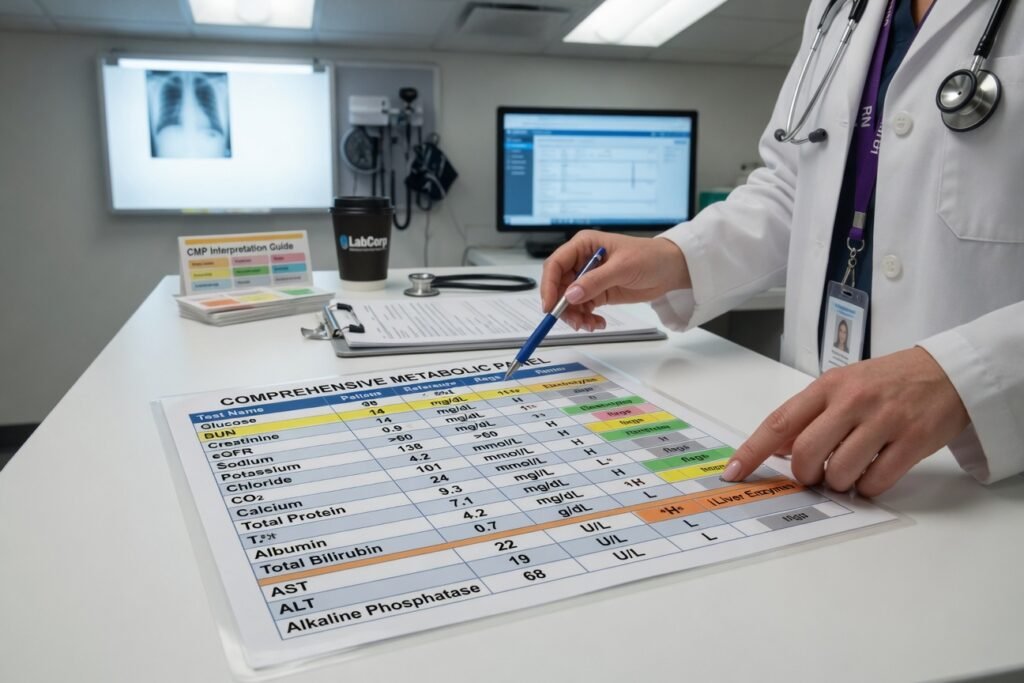
What Your Comprehensive Metabolic Panel Really Tells You (And What It Doesn’t)
Maria, a 52-year-old accountant, walked into her doctor’s office last month for a routine physical and left with lab results showing her comprehensive metabolic panel was “perfectly normal.” Three weeks later, she collapsed at work with severe dehydration and acute kidney injury. Her electrolytes had actually shifted dramatically in that short window—something a single snapshot lab couldn’t have predicted. This illustrates the biggest misconception about comprehensive metabolic panels: people think they’re a complete picture of metabolic health. They’re not. They’re a useful crosssection of 14 specific measurements at one moment in time, useful for screening and baseline tracking, but they miss the dynamic changes your body experiences constantly.
Key Facts About Comprehensive Metabolic Panels
- The comprehensive metabolic panel measures exactly 14 values: glucose, calcium, sodium, potassium, chloride, CO2, blood urea nitrogen (BUN), creatinine, albumin, total protein, alkaline phosphatase, AST, ALT, and bilirubin—nothing more, nothing less
- According to the CDC, approximately 68% of adults over 50 have at least one abnormal result on their first comprehensive metabolic panel, but only 22% have clinically significant findings requiring intervention
- The test costs between $50-200 without insurance, making it one of the most frequently ordered labs, yet abnormalities often resolve without treatment within weeks due to transient causes like dehydration or temporary medication effects
- Your potassium level can shift by 0.3-0.5 mEq/L within hours based solely on whether you exercised that morning or consumed salty foods, yet the reference range is only about 3.5-5.0 mEq/L total
- A normal comprehensive metabolic panel does not rule out diabetes, liver cirrhosis, kidney disease, or electrolyte disorders in early stages—these conditions may show no abnormalities until they’re moderately advanced
Understanding How Your Metabolic Panel Works
Think of your comprehensive metabolic panel like taking a single photograph of a busy highway at noon on Tuesday. It tells you exactly how many cars were there that moment, their speeds, their spacing. But it doesn’t tell you what the road looks like at 6 AM during rush hour or what happens when it snows.
Your metabolism is constantly shifting. The 14 measurements on this panel represent the concentration of specific substances in your blood serum at the exact moment the needle went in. Glucose rises after meals. Potassium drops after vigorous exercise. Creatinine fluctuates based on muscle breakdown and hydration status. Your liver and kidneys are continuously filtering, adjusting, and rebalancing these substances—they’re not static targets.
The panel essentially measures two main functions: how well your kidneys filter waste (via creatinine and BUN), and how well your liver processes nutrients and clears waste (via liver enzymes and bilirubin). The electrolyte measurements—sodium, potassium, chloride, CO2—show whether your body’s internal electrical balance is maintained. Glucose and protein measurements indicate nutritional status and metabolic function. It’s a reasonable screening tool, but it’s genuinely incomplete.
Causes and Risk Factors for Abnormal Results
Most people assume abnormal values mean disease. Not necessarily. Dehydration is probably the single most common reason for “abnormal” comprehensive metabolic panel results in my experience, yet it’s completely reversible and often not even listed as a differential diagnosis by patients.
Here’s what drives abnormal values: medications are massive culprits. ACE inhibitors and ARBs can elevate potassium. Diuretics can deplete it. Statins can mildly elevate liver enzymes in 2-3% of people. NSAIDs directly impact kidney function. Corticosteroids elevate glucose. Alcohol consumption, even moderate amounts, can raise liver enzymes and glucose.
Acute illness—urinary tract infections, pneumonia, gastroenteritis—creates temporary metabolic stress that shifts multiple values. Intense exercise can elevate creatinine and AST falsely. Even tight tourniquet placement during blood draw can concentrate electrolytes artificially high.
Chronic kidney disease, diabetes, liver disease, and heart failure obviously cause persistent abnormalities. But here’s what gets missed: inadequate caloric intake or rapid weight loss creates low albumin and protein levels that mimic liver disease. Muscle loss from inactivity creates falsely low creatinine that makes kidney function seem better than it actually is. Hemolysis—red blood cells rupturing in the test tube itself—can falsely elevate potassium and AST. The lab technician matters more than people realize.
Signs and Symptoms You Might Experience
Here’s the uncomfortable truth: most people with abnormal comprehensive metabolic panel results feel completely normal. That’s why screening labs exist. But some patterns do produce symptoms you might notice.
Elevated potassium above 6.0 mEq/L causes vague fatigue, muscle weakness, and occasionally heart palpitations—but these are so nonspecific that people blame stress or poor sleep. Low potassium below 3.0 creates similar fatigue plus muscle cramps, especially at night. High sodium (above 145 mEq/L) causes intense thirst and confusion. Low sodium (below 130 mEq/L) produces headaches, nausea, and in severe cases, seizures—but again, patients typically don’t connect these to a lab value.
Elevated creatinine and BUN might mean your kidneys are struggling, but you won’t feel it. Early kidney disease produces no symptoms whatsoever. By the time you feel fatigued and nauseated from kidney dysfunction, your kidney function has usually declined 50-60%.
High glucose (above 126 fasting) doesn’t feel like anything initially. Low glucose below 70 creates anxiety, shakiness, sweating, and intense hunger—you’ll definitely notice that. Elevated liver enzymes produce no sensation; liver disease is largely silent until cirrhosis develops.
The early warning signs people actually overlook: persistent mild nausea without vomiting, subtle changes in energy level, reduced appetite, or slight swelling in your feet—these are often attributed to aging or stress rather than metabolic abnormalities.
How Your Doctor Diagnoses Metabolic Problems
The diagnostic process starts with your routine comprehensive metabolic panel, which takes about 24 hours for results. Your doctor looks for values outside the reference range—though “reference range” is just the 95% confidence interval from healthy people, so some normal variation is inevitable.
If results are abnormal, here’s what actually happens: your doctor reruns the test. Many “abnormalities” don’t repeat on the second draw. If they do repeat, they investigate the context. Were you fasting? Dehydrated? On new medications? They’ll correlate results with your symptoms and medical history.
From there, targeted testing depends on which values are abnormal. High creatinine prompts urine tests and possibly renal ultrasound. Elevated liver enzymes require hepatitis panels and ultrasound. Abnormal glucose leads to hemoglobin A1C testing. Abnormal potassium might warrant EKG to check for cardiac effects.
The actual patient experience: you fast 8-12 hours, sit in a clinic chair, feel a needle stick, give about 5 milliliters of blood, wait 1-2 days, then sit in an office while your doctor either says “all normal” or suggests follow-up. Most people want definitive answers immediately. Metabolic medicine rarely works that way.
Treatment Options Based on Your Results
Treatment depends entirely on what’s abnormal and why. This isn’t a one-size category.
Elevated glucose gets managed with lifestyle changes first—diet modifications and exercise—then metformin, a first-line oral medication that improves insulin sensitivity. If that fails, second-line agents include GLP-1 receptor agonists like semaglutide, which also promote weight loss, or SGLT2 inhibitors like empagliflozin, which offer kidney protection benefits beyond glucose control.
Abnormal potassium requires identifying the cause. High potassium from kidney disease might need sodium polystyrene sulfonate (Kayexalate) to remove potassium through your gut, or simply dietary potassium restriction and medication adjustments. Low potassium from diuretics usually responds to potassium supplementation or adding a potassium-sparing diuretic like spironolactone.
Elevated liver enzymes from medication usually resolve by stopping the offending drug. Elevated enzymes from fatty liver disease (nonalcoholic fatty liver disease affects about 25% of Americans per NIH data) improve with weight loss and reduced refined carbohydrate intake—there’s no medication that reverses it, though pioglitazone shows some benefit in research settings.
Elevated creatinine from kidney disease requires blood pressure control with ACE inhibitors or ARBs, which slow kidney disease progression. Sodium restriction, diabetes control, and avoiding NSAIDs become essential.
The evidence actually shows that treating mild abnormalities aggressively doesn’t always improve outcomes. A creatinine of 1.3 in an 80-year-old isn’t the same as 1.3 in a 35-year-old. Your doctor should adjust treatment intensity to your actual risk, not just the number.
Practical Daily Management Strategies
If you have abnormal results, here’s what genuinely helps: maintain consistent hydration—2 liters of water daily for most adults, more if you exercise. Dehydration alone causes more false abnormalities than almost anything else.
Track when you’re tested. Get your comprehensive metabolic panel drawn at the same time of day, ideally fasting, ideally after a normal day (not after heavy exercise or unusual eating). Consistency lets you and your doctor spot real changes versus noise.
Know your medications’ side effects. If you started lisinopril and your potassium went from 4.2 to 4.8, that’s expected and usually benign. If it jumps to 5.5, that’s concerning. Understanding the mechanism helps you interpret results logically.
Get a second draw if results surprise you. Real abnormalities repeat. Lab errors happen, especially with potassium in test tubes that sit too long or weren’t handled properly. A repeat draw costs less than unnecessary specialist visits.
Request trends, not snapshots. Ask your doctor to print your last 2-3 comprehensive metabolic panels together. A creatinine that’s slowly climbing from 0.9 to 1.0 to 1.1 over three years means something different than one that jumps from 0.9 to 1.3 overnight.
Prevention: What Actually Reduces Abnormal Results
Here’s what the evidence actually supports: sustained moderate exercise (about 150 minutes weekly) improves glucose control and kidney function independent of weight loss. Mediterranean-style diets with plenty of vegetables, fish, and minimal processed foods improve multiple metabolic parameters simultaneously. Adequate sleep—genuinely 7-9 hours—improves glucose metabolism and electrolyte regulation through its effects on cortisol and sympathetic nervous system activity.
Limiting NSAIDs to genuine necessity rather than routine use protects kidney function significantly. Moderate alcohol consumption (one drink daily for women, two for men) shows cardiovascular benefits, but anything beyond that raises liver enzyme and triglyceride concerns.
Regular comprehensive metabolic panel screening—annually for people over 50, every 2-3 years for healthy younger adults—catches slow deterioration before it becomes symptomatic. But frequency should match your actual risk factors, not a universal schedule.
The caveats: prevention works for chronic conditions like diabetes and hypertension only if you actually implement changes and maintain them. Short-term lifestyle interventions that last three months then revert produce no lasting benefit. And some people have genetic predispositions that make metabolic abnormalities nearly inevitable regardless of lifestyle—familial hyperc