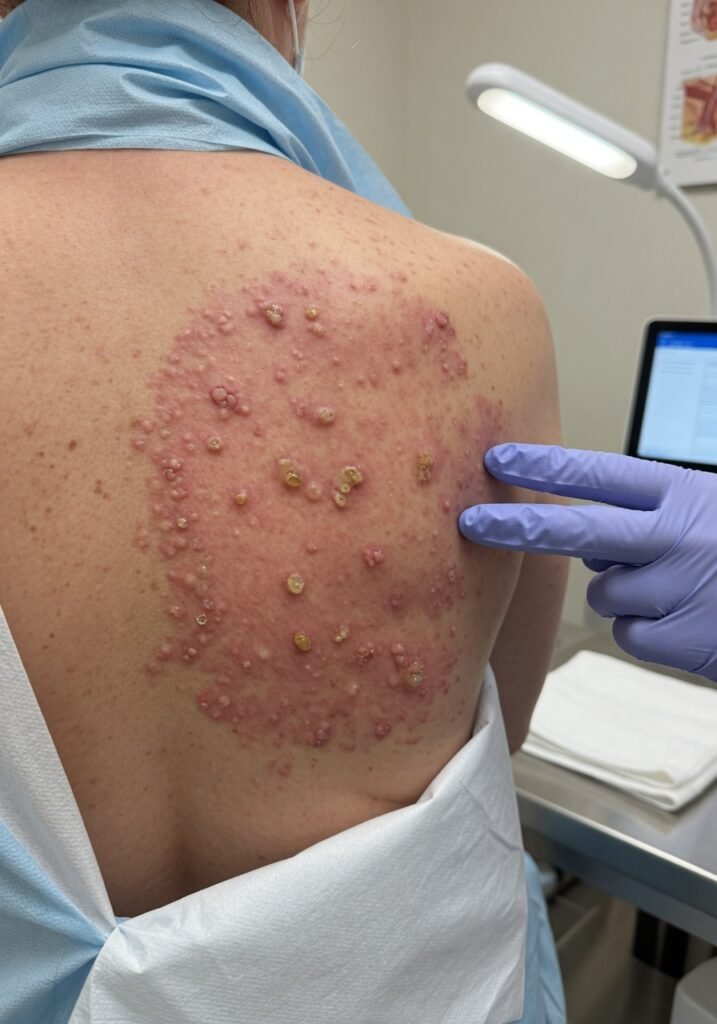
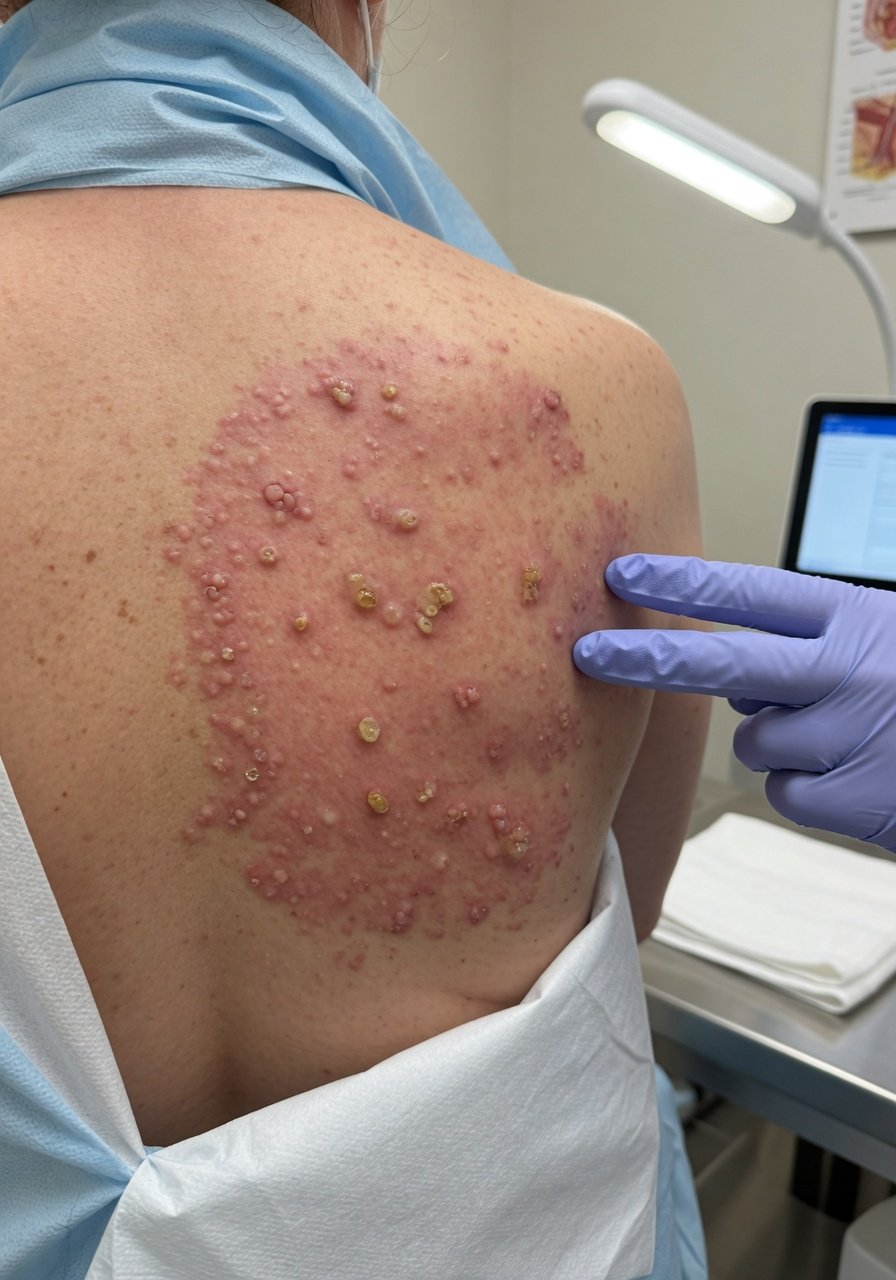
Sarah, a 58-year-old accountant, woke up one Tuesday morning with what she thought was a pulled muscle on her left side. By Thursday, a burning rash had erupted in a stripe across her ribs, and the pain was so sharp she couldn’t sleep more than two hours at night. Her doctor confirmed what she feared: shingles, the reactivation of the chickenpox virus that had been dormant in her nerve tissue for four decades.
Shingles catches most people off guard. You think you survived chickenpox years ago and moved on with your life. Then one day, the virus wakes up. Understanding what’s actually happening in your body, recognizing the early signs before the rash appears, and knowing your treatment options can make a significant difference in how severe this infection becomes and how long you suffer.
Key Facts About Shingles
- Approximately 1 in 3 Americans will develop shingles during their lifetime, with the CDC reporting nearly 1 million cases annually in the United States.
- The risk of shingles increases dramatically after age 50, with incidence rates jumping from about 4 per 1,000 person-years at age 40 to 11 per 1,000 person-years by age 80.
- Post-herpetic neuralgia, the chronic pain that can persist after the rash heals, affects approximately 10-18% of shingles patients and can last for months or years.
- The varicella-zoster virus that causes shingles reactivates in only one specific dermatome (nerve distribution area) in about 90% of cases, which is why the rash typically appears in a band or stripe on one side of the body.
- Antiviral treatment started within 72 hours of rash onset reduces pain duration by approximately 50% compared to no treatment, according to JAMA research.
Understanding the Biology Behind Shingles
Here’s what most people don’t realize: shingles isn’t a new infection. It’s an old one waking up. When you had chickenpox as a child, the varicella-zoster virus didn’t leave your body completely. Instead, it retreated into nerve cells near your spinal cord, where it lay dormant for decades. Think of it like a burglar hiding in your basement after robbing your house—except this burglar is microscopic and has been there so long you forgot about the break-in.
When your immune system weakens for any reason, the virus can reactivate. It travels down the nerve fibers to the skin, causing that characteristic painful rash. Unlike chickenpox, which spreads across your whole body randomly, shingles typically stays confined to one nerve’s territory—that’s why you get that distinctive stripe or band pattern, usually on your torso, face, or neck.
The pain of shingles often surpasses the pain of the original chickenpox infection. Why? Because the virus is now inflaming mature nerve tissue, not the delicate skin tissue of a child. These irritated nerves send constant alarm signals to your brain even after the rash heals, which is why some people develop chronic pain lasting months or years.
Causes and Risk Factors
You cannot catch shingles from another person. What you can do is expose someone who’s never had chickenpox to the varicella-zoster virus through contact with your rash, and they’ll develop chickenpox, not shingles. This matters for your isolation decisions during an outbreak.
The primary risk factor is simply age. If you’ve lived long enough to have had chickenpox, you’re at risk. Your immune system becomes less efficient at containing dormant viruses as you get older. Specific conditions dramatically increase your risk: HIV infection with CD4 counts below 200, cancer treatment (particularly chemotherapy), organ transplantation with immunosuppressive therapy, and chronic corticosteroid use.
But here’s what gets missed: psychological stress is a legitimate risk factor, not just something wellness influencers mention. Research has shown that prolonged emotional stress can suppress cell-mediated immunity, the specific immune response needed to keep the varicella-zoster virus suppressed. Patients often report developing shingles during or shortly after periods of significant stress—a breakup, job loss, caring for a dying parent. This isn’t coincidence. Other overlooked risk factors include recent vaccines (from the temporary immune adjustment), radiation therapy to the spine, and even localized trauma to an area of skin or nerve tissue.
Signs and Symptoms: What Actually Happens
The classic presentation doesn’t always announce itself clearly. Most patients experience a prodromal phase lasting 2-3 days before any rash appears. This is the period doctors and websites often minimize, but it’s crucial for early recognition. You might feel burning, tingling, or stabbing pain in a specific area. Some people describe it as a deep ache. You might have mild fever, fatigue, or headache. Honestly, it feels like you’re getting sick with something nonspecific.
Then comes the rash. It typically appears in a distinct band or series of patches on one side of your body. The skin starts red and inflamed, then fills with fluid-filled blisters over the course of several days. This is when most people finally realize something serious is happening. The blisters are usually extremely tender to touch. Clothing rubbing against them can cause significant pain. Some patients report that even light contact feels unbearable.
Beyond the obvious rash, you might experience sensitivity to light (photophobia), particularly if shingles affects the eye area. You might develop severe itching as the rash begins to crust over, usually around day 7-10. Some people get shingles in the ear canal or on the scalp and don’t realize it at first because they’re expecting to see the rash in the mirror. If shingles affects the facial nerve, you could develop facial drooping or weakness.
The pain intensity varies dramatically between individuals. Some patients describe it as the worst pain they’ve ever experienced. Others manage it with over-the-counter medications. Age matters here—older patients tend to have more severe pain and higher risk of chronic complications.
Diagnosis: How Doctors Confirm Shingles
Diagnosis is usually clinical, meaning your doctor can diagnose shingles based on the appearance and distribution of the rash plus your symptom pattern. The characteristic unilateral dermatomal distribution (one-sided, following a nerve pattern) is pretty distinctive. Most doctors don’t need additional testing.
If there’s any uncertainty, your doctor can order specific tests. A PCR test on fluid from the blisters confirms varicella-zoster virus DNA. An antigen detection test using a swab from the blister fluid works but is less sensitive than PCR. Sometimes a culture is done, though it’s slower and less frequently used now.
The important part from your perspective: get evaluated quickly. If you’re within 72 hours of rash onset, antiviral medications are most effective. If you wait a week or two, antivirals help less. So if you suspect shingles, don’t delay calling your doctor thinking the rash will go away on its own or it’s not serious enough to warrant a visit.
Treatment Options
Antiviral medications are the cornerstone of treatment. Acyclovir, valacyclovir, and famciclovir are the three main options. Valacyclovir is typically preferred because it has better bioavailability and requires fewer daily doses. The standard dose is valacyclovir 1000 mg three times daily for 7 days. Acyclovir requires intravenous administration in hospitalized patients but can be taken orally for milder cases, though it’s less convenient (five times daily dosing).
The evidence is clear: starting antivirals within 72 hours of rash onset reduces acute pain duration and significantly lowers the risk of post-herpetic neuralgia. This is one of the few instances where timing dramatically affects outcome. If you start antivirals on day 8 after symptom onset, you’ve largely missed the window of maximum benefit.
For pain management, you’ll typically need more than acetaminophen or ibuprofen. Gabapentin, a nerve pain medication, helps many patients and is often started at 300 mg three times daily, then increased based on tolerance and response. Pregabalin is similar. Topical capsaicin cream can help once the blisters have crusted over and the skin has healed enough to tolerate it; applying it directly to the affected area causes temporary burning but can provide sustained relief as it depletes nerve pain transmitters.
For severe acute pain, some doctors prescribe short-term opioid medications, though this is controversial and increasingly avoided due to addiction concerns. Topical lidocaine patches applied directly to the rash area provide localized relief without systemic side effects.
Corticosteroids like prednisone have shown modest benefit in reducing chronic pain if started early, particularly in patients over 50, though the evidence is mixed and they carry their own risks with prolonged use.
Practical Daily Management Strategies
Wear loose, soft clothing that doesn’t irritate the rash. Cotton is better than synthetic fabrics. Some patients find that silk or specialized antimicrobial fabrics help. Avoid elastic waistbands or bra straps that rub against affected areas.
Keep the rash clean and dry. Twice daily, gently wash the area with mild soap and water, pat (don’t rub) dry, and let it air dry completely before dressing. This prevents secondary bacterial infection, which can complicate recovery.
Apply cool compresses if the area feels hot and inflamed. Some patients find relief from cool (not cold) water compresses for 10-15 minutes at a time. Heat worsens symptoms for most people, though some find warmth soothing—individual variation is real.
Calamine lotion or hydrocortisone cream can help itching in later stages. Avoid petroleum jelly, which traps moisture and can promote bacterial growth. Once blisters have crusted over and you’re past the acute phase, moisturizing becomes important to prevent excessive dryness and scarring.
Sleep disruption is common, and narcotic pain medications can help you sleep enough to support immune recovery, though dependence is a legitimate concern if used beyond 2-3 weeks.
Prevention: The Vaccine Question
The recombinant zoster vaccine (Shingrix) changed the prevention landscape significantly. This is a two-dose series given 2-6 months apart. The CDC now recommends it for all adults age 50 and older, regardless of whether they remember having chickenpox or when they had it.
The evidence is strong. Shingrix reduces the risk of developing shingles by approximately 90% in people age 50-59 and about 97% in those age 60 and older. It also reduces post-herpetic neuralgia risk by over 88% if shingles does develop despite vaccination. This represents a substantial public health advance.
The older vaccine, Zostavax (a live attenuated vaccine), is no longer recommended due to lower efficacy. If you received Zostavax previously, you should still get Shingrix—there’s at least a 12-month interval recommended between them.
The caveat: Shingrix causes significant local and systemic side effects in many people—arm soreness, fatigue, temporary fever, and malaise are common for 24-48 hours after each dose. This is actually the vaccine doing its job and stimulating immune response, but it does mean you should schedule vaccination when you can tolerate a day of feeling under the weather.
Frequently Asked Questions
Yes, though recurrence is uncommon. Only about 1-4% of people develop shingles a second time. If you’ve had shingles once, your second episode is more likely to occur at
Sources & Medical References
HealthTopics.com articles are based on peer-reviewed medical research and guidance from the NIH, CDC, and WHO. See our editorial policy for full sourcing standards.