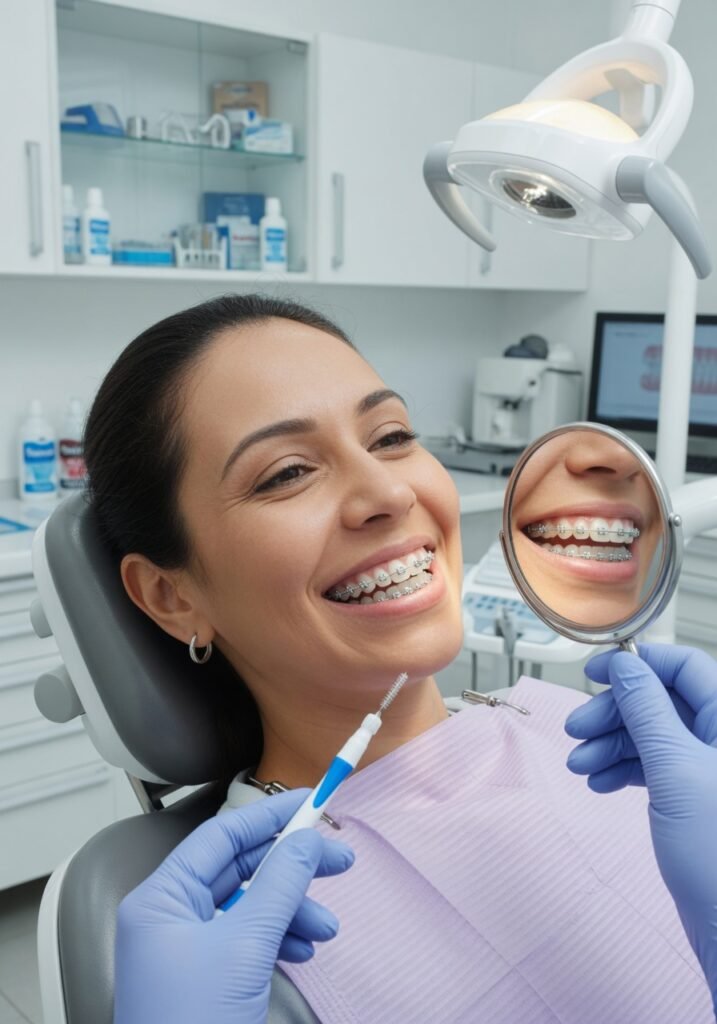

Adult Braces: What Research Actually Shows About Straightening Teeth Later in Life
Marcus, a 38-year-old accountant, sat in the orthodontist’s chair wondering if he’d made a mistake waiting until his late thirties to finally address his crowded teeth. He wasn’t alone in that hesitation. According to the American Association of Orthodontists, roughly 20% of all orthodontic patients are now adults over 18, a number that has nearly tripled since 2000. But here’s what caught his attention: research published by the NIH shows that adults who straighten their teeth don’t just gain cosmetic confidence—they reduce their risk of periodontal disease by up to 30% compared to those with untreated misalignment, because straight teeth are simply easier to keep clean.
The real question isn’t whether your teeth can move at 38, 48, or 58. They can. The question is which method fits your life, budget, and tolerance for visibility. That’s where the choice between traditional braces and clear aligners like Invisalign becomes genuinely complex.
Key Facts About Adult Orthodontics
- Treatment duration: Adults typically require 18-30 months for significant tooth movement, compared to 12-24 months in younger patients, because adult bone density is higher and remodeling happens more slowly
- Cost variance: Metal braces average $3,000-$6,000 total, while Invisalign ranges from $4,000-$8,000, though insurance rarely covers either option fully after age 18
- Bone loss consideration: Adults have approximately 0.5-1% annual bone resorption naturally; orthodontic pressure can accelerate this slightly, making orthodontist selection crucial for monitoring
- Compliance impact: Studies in the Journal of Clinical Orthodontics show adults have 40% better treatment compliance than adolescents, but Invisalign requires 20-22 hours daily wear to be effective
- Concurrent issues: Nearly 35% of adults seeking orthodontics simultaneously need periodontal treatment, which must be addressed before or during brace placement
How Adult Teeth Actually Move
Think of your teeth as being held in place by a complex web of connective tissue and bone. When an orthodontist applies consistent, gentle pressure—whether through brackets or clear aligners—something remarkable happens at the cellular level. Pressure on one side of the tooth increases osteoclast activity, which breaks down bone. On the other side, reduced pressure signals osteoblasts to build new bone. It’s not the teeth moving through solid bone; it’s the bone itself remodeling around the teeth. This process never really changes with age. What changes is the pace and the quality of healing that occurs in between adjustments.
In adults, this remodeling happens about 10-15% more slowly than in teenagers because adult bone has higher mineral density and less blood flow per unit volume. That’s why your orthodontist will likely schedule adjustments every 4-8 weeks rather than every 3-4 weeks. Patience becomes the actual requirement.
Why Adults Choose Orthodontics Now: Real Risk Factors
Most articles discuss crowding or overbites as static conditions. That misses what actually drives adults to seek treatment. Yes, genetics matter—if your parents had crowded teeth, you likely do too. Yes, childhood habits like thumb-sucking or tongue thrust can create bite problems. But what changes in adulthood is consequence.
Untreated crowding creates cleaning difficulties. Floss doesn’t fit between teeth. Plaque accumulates in crevices your toothbrush can’t reach. The CDC reports that about 42% of American adults have untreated tooth decay, and misaligned teeth are a significant contributing factor because the geometry makes hygiene harder. Over 20 years, this isn’t just an aesthetics problem—it becomes a periodontal catastrophe.
Here’s what most dental websites skip: adult tooth loss and jaw joint stress. When your bite is off, forces distribute unevenly. Your masseter and temporalis muscles work harder. Over decades, this can contribute to temporomandibular joint (TMJ) dysfunction, headaches, and abnormal wear patterns on remaining teeth. A 42-year-old with a Class II malocclusion isn’t just thinking about a photo; she’s thinking about whether she’ll still have molars at 65.
One overlooked risk factor is hormonal. Women entering perimenopause experience decreased estrogen, which directly affects bone density and gum health. Starting orthodontics during this window means bone remodeling occurs against a backdrop of natural bone loss. Your orthodontist needs to know this.
What You’ll Actually Experience: Daily Reality
Your first week with braces is uncomfortable. Not unbearable, but genuinely sore. The brackets and wire create friction. Your lips rub raw against metal. Chewing feels strange. This subsides by week two, though soreness returns for 24-48 hours after each adjustment.
The early warning signs people miss: slight tooth mobility. Your teeth aren’t loose in a dangerous way—they’re slightly more mobile because the periodontal ligament is remodeling. This feels odd. Many adults interpret it as a problem rather than progress.
With Invisalign, you get less soreness but different complaints. The aligners are tight when you first insert them. They’re bulkier than you expect against your teeth. Speech changes slightly for the first few days. The real challenge isn’t pain; it’s compliance. You have to remove them to eat and drink anything but water, then clean them, then reinsert. This happens roughly 6 times daily for most people. Studies show patients who underestimate this commitment abandon clear aligner therapy early.
Food restrictions differ. With braces, you avoid popcorn, nuts, hard candy, sticky foods, and anything that requires biting with your front teeth. The list is real. With Invisalign, you technically avoid nothing when eating—you simply remove the aligners—but many patients forget to put them back afterward, immediately destroying the treatment timeline.
Getting Diagnosed: What Actually Happens
Your orthodontist doesn’t just look at your teeth. They perform a clinical examination that includes: examination of your bite (occlusion) from three planes, assessment of vertical and horizontal overlaps, evaluation of your skeletal profile from the side and front, and periodontal screening. They take specific X-rays: a panoramic radiograph showing all teeth and bone, a lateral cephalometric radiograph showing jaw position and angle, and potentially cone-beam CT scans if surgical considerations exist.
They’re looking for several things simultaneously. Can your current jaw position accommodate straighter teeth? Is there enough bone to move teeth the distance needed? Do you have existing periodontal disease that requires treatment first? Are any teeth at high risk for root resorption during movement? Do your age and health status mean faster or slower treatment is appropriate?
From your perspective, expect the appointment to last 1-2 hours initially. It’s thorough. They’ll show you models, discuss timeline and cost, and you’ll decide whether you’re ready. Be honest about this: many adults aren’t ready emotionally at their first consultation. Coming back six months later is fine.
Treatment Options: Specific Approaches That Work
Traditional Metal Braces: Stainless steel brackets bonded to each tooth, connected by an archwire. The wire is adjusted at visits to apply pressure. This remains the fastest method for complex cases and generates the most powerful forces. Cost is lowest. Visibility is highest. Maintenance requires interdental brushes and special floss threaders. Food restrictions are real.
Ceramic Braces: Tooth-colored or white brackets with the same mechanics as metal. Slightly less visible. Slightly more breakable. Same cost as metal or marginally higher. Same maintenance burden.
Invisalign and Similar Clear Aligners: Custom-molded clear plastic trays that fit over teeth, replaced every 1-2 weeks. Each set moves teeth slightly. After 20-40 sets, significant movement occurs. Advantages: nearly invisible, removable for eating and cleaning, less mouth irritation. Disadvantages: requires exceptional compliance, more expensive, less effective for severe crowding or bite correction, relies on patient motivation rather than steady mechanical force.
Which works best? For mild to moderate crowding without significant bite problems, clear aligners work well in compliant adults. For complex cases—severe crowding, bite correction, or cases requiring precise three-dimensional tooth control—braces remain superior. Your orthodontist will recommend one over the other based on your specific anatomy, not just your preferences.
Daily Management: Concrete Strategies
With braces: Brush after every meal. Use an electric toothbrush if possible—it’s more effective around brackets. Spend 2-3 minutes brushing. Use interdental brushes (like TePe brushes) between brackets where regular floss won’t fit. Floss nightly with a floss threader under the wire. Rinse with fluoride mouthwash at night. Avoid hard, sticky, and crunchy foods. If a wire pokes your cheek, apply orthodontic wax to the bracket end—this is normal and happens repeatedly.
With aligners: Remove aligners before eating or drinking anything except water. Brush and floss your teeth after meals before reinserting aligners. Clean aligners by brushing them gently under running water; avoid hot water as it warps plastic. Store them in their case. Wear them 20-22 hours daily—this is non-negotiable for effectiveness. Set phone reminders if you remove them frequently. Change to the next aligner exactly on schedule; don’t skip ahead to move faster.
For both: Attend every adjustment appointment on schedule. Missing appointments delays treatment significantly. Take ibuprofen 30 minutes after adjustment if you’re sore; this reduces discomfort without interfering with tooth movement. Stay on top of any periodontal work your dentist recommends simultaneously.
Prevention and Long-Term Health Implications
Can you prevent the need for adult braces? Partially. Early orthodontic intervention in children prevents roughly 40% of adult cases by addressing problems while bones are still highly remodeling. But genetics overwhelms prevention. If both your parents had crowded teeth, no amount of prevention stops you from developing crowding.
The evidence on retention is clear: straight teeth don’t stay straight by themselves. After treatment, you’ll wear a fixed retainer (thin wire bonded behind upper and lower teeth) permanently and a removable retainer (clear plastic or acrylic) nightly indefinitely. Studies show that without indefinite retention, 60-70% of cases relapse toward their original position over 5-10 years. This isn’t a treatment failure—it’s natural tooth movement. Your body “remembers” where your teeth were supposed to be and gradually moves them back.
Frequently Asked Questions
Sources & Medical References
HealthTopics.com articles are based on peer-reviewed medical research and guidance from the NIH, CDC, and WHO. See our editorial policy for full sourcing standards.