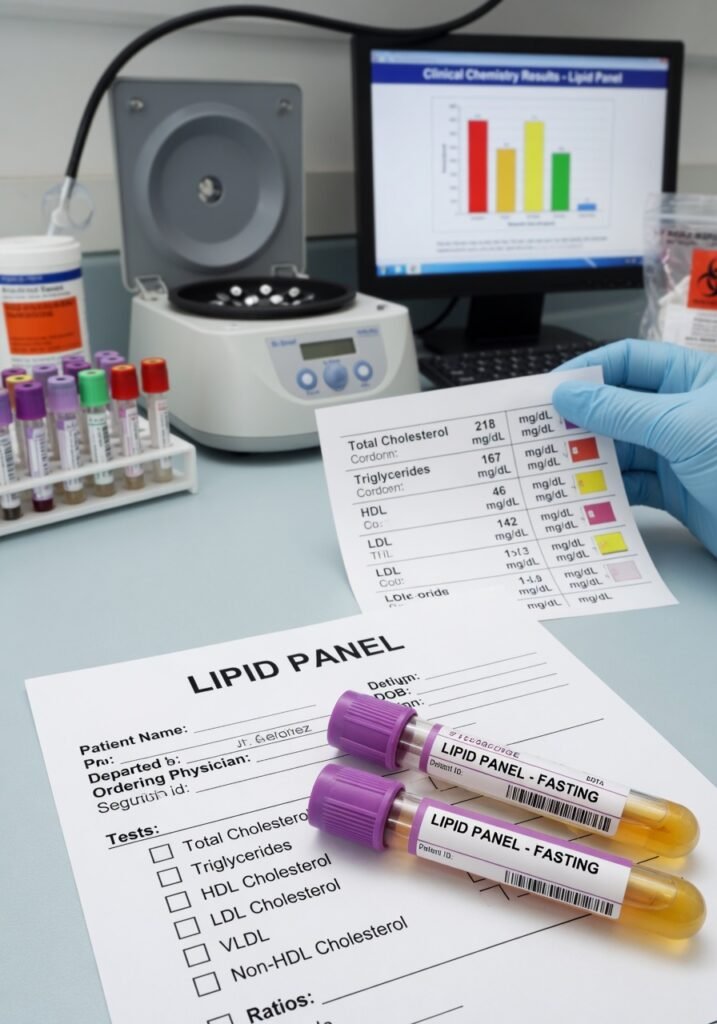

What Most People Get Wrong About Lipid Panels
Sarah, 42, came to my office convinced her total cholesterol of 210 mg/dL meant she was one cheeseburger away from a heart attack. She’d spent three weeks avoiding eggs and butter. What she didn’t know was that her HDL cholesterol was 58 mg/dL—genuinely protective—and her LDL was only 120. Her lipid picture told a very different story than the single number her neighbor had fixated on at a health fair. This is where lipid panels confuse almost everyone: most people think one cholesterol number matters. In reality, a lipid panel contains four separate measurements, and they don’t all point in the same direction. Some of the healthiest people I’ve treated have “high” total cholesterol because they have exceptional HDL levels. Conversely, someone with a “normal” total cholesterol might harbor dangerously elevated triglycerides that nobody noticed. The lipid panel isn’t a single verdict on your heart health—it’s a detailed map, and most patients are reading it like a weather forecast.
Key Facts About Lipid Panels
- A lipid panel measures four distinct values: total cholesterol, LDL cholesterol, HDL cholesterol, and triglycerides. Each one requires independent interpretation.
- According to the CDC, approximately 93 million Americans have total cholesterol levels above 200 mg/dL, yet roughly 35% have never discussed their lipid results with a healthcare provider.
- Triglycerides above 150 mg/dL appear in about 30% of the U.S. population, and this marker independently predicts cardiovascular risk—separate from LDL cholesterol.
- LDL particles exist in different sizes; “small, dense” LDL particles are more atherogenic than larger ones, but standard lipid panels don’t distinguish between them.
- A lipid panel requires 9-12 hours of fasting because triglycerides spike dramatically after eating, potentially causing false elevations in non-fasting measurements.
Understanding Your Lipid Panel: The Real Mechanism
Think of your bloodstream as a delivery system. Cholesterol and triglycerides don’t dissolve in blood like sugar in water—they’re oily molecules that need special trucks called lipoproteins to travel through a watery environment. Your body produces two main types of delivery trucks: LDL (low-density lipoprotein) and HDL (high-density lipoprotein).
LDL acts like a courier carrying cholesterol from your liver to cells throughout your body. The problem? When you have too much LDL circulating, some of it deposits cholesterol in artery walls, creating plaques. HDL works like a cleanup crew, actually removing cholesterol from arteries and transporting it back to your liver for disposal. Triglycerides are your body’s stored energy—they come from excess calories, alcohol, and refined carbohydrates. When triglycerides climb above 150 mg/dL, they can make LDL particles smaller and denser, essentially creating more aggressive delivery trucks.
This is why a lipid panel tells a nuanced story. You might have low LDL but also low HDL—meaning less cholesterol in your arteries but also fewer cleanup crews. Or high triglycerides with decent LDL—which sounds better than it actually is, because those triglycerides are remodeling your LDL particles into a nastier form. The four numbers together paint the actual picture of what’s happening in your vessels.
What Actually Drives Abnormal Lipid Levels
Genetics determines roughly 50% of your cholesterol levels—some people’s livers simply manufacture cholesterol more aggressively. If your parents had early heart disease or high cholesterol, that matters significantly.
Diet obviously influences lipids, but specifically: saturated fat and trans fat raise LDL, while soluble fiber and plant sterols lower it. Simple carbohydrates and alcohol spike triglycerides more than fat does. Sedentary behavior lowers HDL—exercise raises it more reliably than any dietary change does.
Here’s what most articles skip: thyroid dysfunction directly affects lipid metabolism. An underactive thyroid (hypothyroidism) causes LDL and triglycerides to rise, sometimes dramatically. I’ve seen patients labeled “dyslipidemic” who actually just needed levothyroxine. Similarly, metabolic syndrome—a cluster of insulin resistance, abdominal obesity, high blood pressure, and elevated triglycerides—drives lipid abnormalities through insulin’s effect on triglyceride production and HDL catabolism. Finally, inflammation and chronic kidney disease worsen lipid profiles in ways that statins alone won’t fix.
What You’ll Actually Feel (Or Won’t)
Here’s the uncomfortable truth: abnormal lipid levels produce zero symptoms. No chest pain. No shortness of breath. No tingling or fatigue directly caused by high cholesterol. This is why lipid panels exist—to catch a process that damages you silently.
What you might notice: xanthomas (yellowish skin deposits from cholesterol) appear in familial hypercholesterolemia cases, usually around the eyes or Achilles tendon. Corneal arcus—a whitish ring around the iris—sometimes indicates severe dyslipidemia. Pancreatitis can occur when triglycerides exceed 1,000 mg/dL, presenting with severe abdominal pain. But these are advanced presentations.
The real early warning sign? Your age. Men should start lipid screening at 35; women at 45 (or earlier if risk factors exist). If your first panel was normal but you’ve gained 20 pounds, started a high-alcohol lifestyle, or developed type 2 diabetes, your lipids have almost certainly worsened. That’s your window to act before plaques form.
How Your Doctor Actually Diagnoses Lipid Abnormalities
A standard lipid panel requires a 9-12 hour fast. You’ll get blood drawn in the morning after skipping breakfast—this matters because non-fasting triglycerides can be misleadingly elevated. The lab reports four values:
- Total Cholesterol: Ideally under 200 mg/dL (though this number alone is insufficient)
- LDL cholesterol (“bad”): Depends on risk category; goal for most people is under 100 mg/dL, under 70 for those with existing heart disease
- HDL cholesterol (“good”): Higher is better; above 40 for men and 50 for women is baseline acceptable, but 60+ is protective
- Triglycerides: Under 150 mg/dL is normal; 150-199 is borderline high; 200+ is elevated
Your doctor should also calculate non-HDL cholesterol (total cholesterol minus HDL), which captures all atherogenic particles. Some physicians now order advanced lipid testing—particle number and size via nuclear magnetic resonance—though this remains less routine. The Framingham score or ASCVD risk calculator helps determine whether you actually need statin therapy, because not everyone with elevated cholesterol needs medication.
Treatment: When Medication Actually Becomes Necessary
Statins remain first-line therapy. Atorvastatin, rosuvastatin, and pravastatin work by inhibiting HMG-CoA reductase, reducing liver cholesterol production. They lower LDL by 20-55% depending on dose and agent. JAMA published data showing that high-intensity statins (atorvastatin 40-80 mg daily or rosuvastatin 20-40 mg daily) reduce major vascular events by roughly 22% over five years.
Ezetimibe blocks intestinal cholesterol absorption and lowers LDL an additional 15-20%. PCSK9 inhibitors (evolocumab, alirocumab) are monoclonal antibodies that dramatically lower LDL but cost $10,000+ annually without insurance. They’re reserved for familial hypercholesterolemia or statin-intolerant patients.
For elevated triglycerides specifically, fibrates like fenofibrate reduce triglycerides 35-50% but carry modest risk of muscle injury when combined with statins. Icosapent ethyl (Vascepa) is a high-dose fish oil derivative; recent trials showed it reduces cardiovascular events in patients with elevated triglycerides despite statin therapy. Bempedoic acid (Nexletol) lowers uric acid and LDL simultaneously, useful for gout-prone patients.
The catch? Medication without lifestyle modification is incomplete. A statin on top of a sedentary, high-trans-fat diet achieves less than a statin with actual behavioral change.
Daily Management: Concrete Strategies That Actually Work
For LDL reduction: Replace saturated fat with plant-based protein—swap ground beef for lentil crumbles in tacos, not just cutting fat entirely. Aim for two daily servings of fatty fish (salmon, mackerel, sardines) for omega-3s. Add a tablespoon of ground flaxseed or chia seeds to oatmeal; the soluble fiber genuinely lowers LDL 5-10%. Eat plant sterols: two grams daily from fortified yogurts, plant-based butters, or supplements reduces LDL another 5-8%.
For triglycerides: Reduce refined carbohydrates aggressively. Replace white bread with whole grain; replace sugary beverages with unsweetened tea. If alcohol consumption exceeds one drink daily for women or two for men, reduce it—alcohol is metabolized directly to triglycerides. Weight loss of 5-10% lowers triglycerides 20-30%.
For HDL elevation: This requires actual aerobic exercise. 150 minutes of moderate-intensity cardio weekly raises HDL 3-9%, more than any dietary intervention. Swimming, cycling, and jogging outperform resistance training alone.
For all lipid measures: Sleep quality matters. Poor sleep (<6 hours nightly) worsens lipid profiles; aim for consistent 7-9 hour sleep. Manage stress actively—chronic psychological stress elevates triglycerides independently of weight.
Prevention: What Evidence Actually Shows
Preventing abnormal lipids begins before the numbers worsen. Maintain BMI under 25 through consistent diet and exercise—this prevents 40-50% of dyslipidemia cases tied to weight gain. Mediterranean-style diets (olive oil, fish, legumes, whole grains) reduce cardiovascular events by roughly 30% in landmark trials.
Statins work preventively too. If you have strong family history of early heart disease or extremely elevated LDL (>190 mg/dL), starting statins in your 40s prevents events later. However, not everyone with “high” cholesterol needs statins forever—if your LDL naturally falls through lifestyle modification, you might discontinue safely.
The caveat: prevention requires sustained action. People often normalize lipids for six months, then revert to previous habits, only to find themselves back at baseline. The goal is permanent behavioral integration, not temporary dieting.
Frequently Asked Questions
Sources & Medical References
HealthTopics.com articles are based on peer-reviewed medical research and guidance from the NIH, CDC, and WHO. See our editorial policy for full sourcing standards.